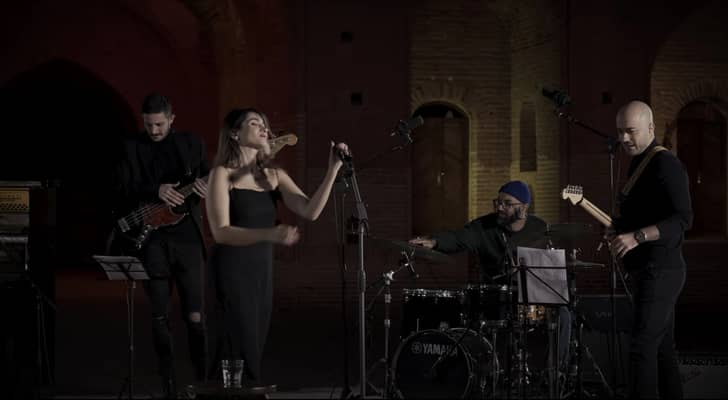
Iran sentences Parastoo Ahmadi, crew to flogging over YouTube concert without hijab
Note: AI technology was used to generate this article’s audio.
- Iranian singer Parastoo Ahmadi and eight others reportedly sentenced to 74 lashes over a filmed concert broadcast online.
- The court also imposed a two-year travel ban and restrictions on artistic activity.
An Iranian court has reportedly sentenced singer Parastoo Ahmadi, musicians Ehsan Beiraqdar and Soheil Faqih Nasiri, along with six members of a production team, to 74 lashes over their involvement in the “Caravanserai Concert,” according to Iranian human-rights groups and diaspora media outlets.
The ruling also includes a two-year travel ban and a two-year prohibition on artistic activities.
The Qom Provincial Criminal Court ruled that the group had “offended public decency” through what it described as the production and publication of obscene and immoral content on online platforms.
The artists were first detained after their performance was broadcast on YouTube in December. They were later ordered to appear before the Prosecutor’s Office for Moral Security the following January.
According to BBC Persian, the court based its ruling on Articles 638 and 743 of the Islamic Penal Code and the Computer Crimes Law.
Article 638 criminalizes acts deemed to violate public morality or religious norms, while Article 743 addresses the promotion of corruption or immorality through digital platforms.
During the performance, Ahmadi sang without a hijab, a point cited in reports surrounding the case. Iranian law also restricts women from singing before mixed audiences in certain contexts, with penalties that can include flogging.
However, attorney Mohammad Hadi Jafarpour argued that women singing is not explicitly criminalized under Iranian law, saying such interpretations lack legal basis, according to the Dadban legal organization.
Iran’s semi-official Tasnim News Agency reported that police in Mazandaran said the video was “contrary to social norms and values,” adding that Ahmadi was summoned and instructed to appear before judicial authorities.
In response to the ruling, Iranian-American journalist and activist Masih Alinejad condemned the verdict, criticizing restrictions on women’s rights and artistic expression.
She said the case reflected broader systemic repression of women’s voices and freedoms in the country.