Trump: Continued warfare would have sealed off Hormuz
Note: AI technology was used to generate this article’s audio.
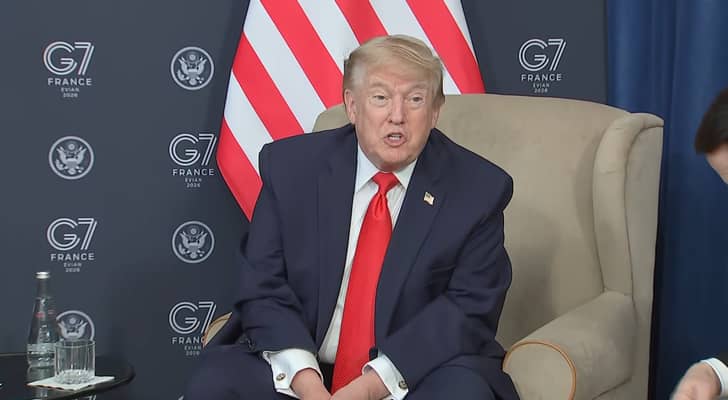
Speaking from the sidelines of the G7 Summit in the French Alps, US President Donald Trump issued an aggressive defense of his administration’s newly brokered peace framework with Iran.
Trump asserted that his decisive use of military force successfully dismantled Iran’s strategic defenses, forcing Tehran to capitulate and accept terms that completely prevent the Islamic Republic from obtaining a nuclear weapon.
Trump underscored that the deal directly averted a devastating global economic crisis by permanently unlocking the blockaded Strait of Hormuz.
In a series of breaking remarks to reporters, the President made it clear that Western coalition forces were prepared to wage an indefinite war if Tehran had refused the administration's final terms.
"If we had continued fighting, the Strait of Hormuz would never have opened at all," Trump stated, emphasizing the strategic necessity of the diplomatic pivot. "The agreement with Iran achieves everything we wanted, from preventing it from possessing a nuclear weapon to opening the Strait of Hormuz."
Second-night bombing threat
The President pulled back the curtain on the final hours of the intense, closed-door negotiations that preceded Sunday's announcement, revealing that the US utilized an unyielding military ultimatum to break the diplomatic deadlock.
"The past two days were extremely difficult," Trump disclosed. "We informed the Iranians that we would return to bombing them for a second night if we did not reach an agreement."
Trump noted that previous operations had already achieved devastating tactical objectives, effectively crippling Iran's conventional defense capabilities and removing its top command structure.
"We eliminated Iran’s leaders and its navy," Trump said, adding that his primary motivation for shifting from active combat to a negotiated settlement was to insulate the global market from a catastrophic disruption. "I struck a deal because I did not want to see an economic disaster."
"If we had not made this deal, the opening of the Strait of Hormuz would not have been achieved, and bombs would still be falling constantly," Trump added.
G7 leaders endorse deal
The diplomatic breakthrough has yielded immediate dividends for the global economy. Following months of commercial gridlock that saw energy shipping volumes through the Persian Gulf dry up entirely, energy markets reacted dynamically to the peace framework.
Trump confirmed that global oil prices have plummeted to unprecedentedly low levels in the immediate aftermath of the announcement, providing crucial breathing room for inflation-weary consumers.
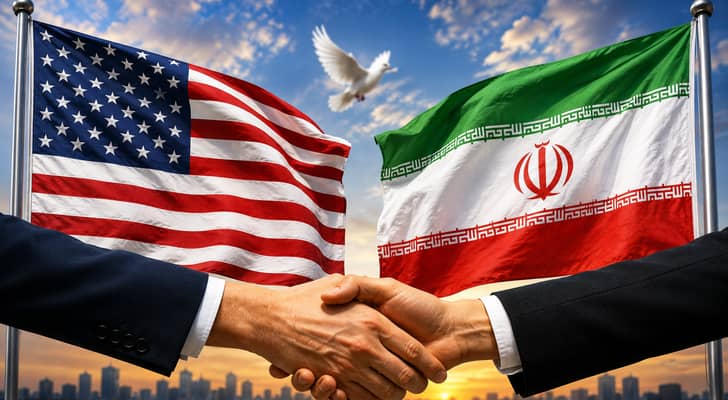
The details of the memorandum of understanding (MOU) -which transitions into a intensive 60-day negotiation window following a formal signing ceremony in Geneva this Friday- were a primary focus of the Group of Seven meetings in Évian.
Trump noted that he personally briefed his international counterparts on the exact mechanics of the deal, reporting an overwhelmingly positive reception from allies who had previously expressed deep reservations over the rapid outbreak of hostilities.
"I discussed the details of the Iran agreement with the leaders at the G7 summit, and they are very happy that we concluded a deal," Trump concluded. Expressing deep confidence in the durability of the truce, he added, "I believe that the Iranian leadership will behave completely differently now."