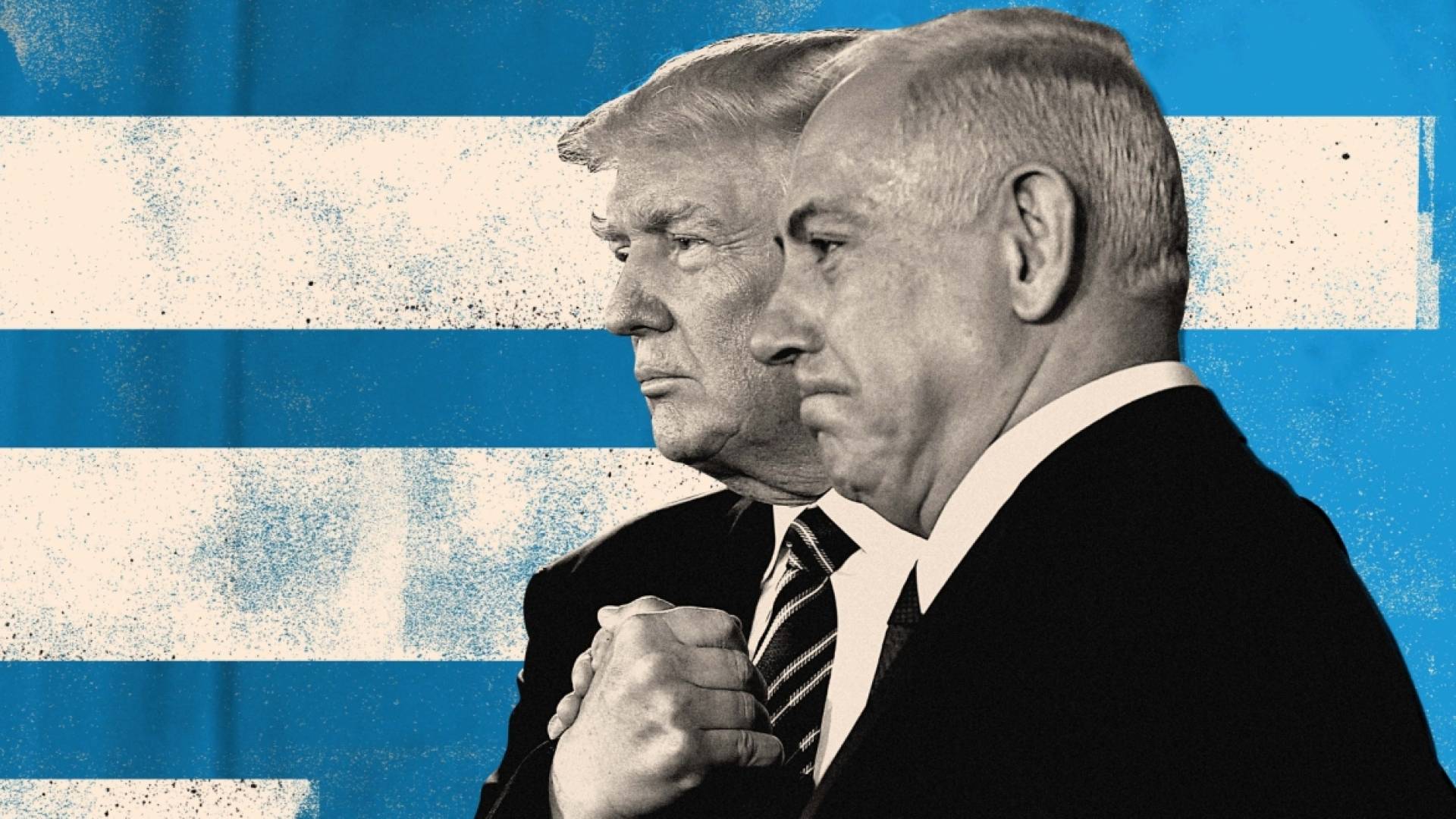
US President Donald Trump and 'Israeli' Prime Minister Benjamin Netanyahu

'Israel' urges US to block release of frozen Iranian assets
Note: AI technology was used to generate this article’s audio.
- Netanyahu doubts ceasefire memorandum will lead to lasting deal
- 'Israel' remains skeptical of broader agreement with Tehran
- Differences emerge between US and 'Israeli' accounts of Iran talks
'Israel' is launching a concerted diplomatic press to convince the United States to withhold the release of billions of dollars in frozen Iranian assets, a crucial economic concession currently embedded in a fast-tracking regional ceasefire agreement.
An 'Israeli' source familiar with the highly sensitive discussions confirmed to CNN that Jerusalem is actively lobbying Washington against providing Tehran with an immediate financial lifeline.
The push comes amid intense behind-the-scenes diplomacy aimed at halting a devastating multi-month conflict that has repeatedly threatened to drag the entire Middle East into a wider war.
Trump diplomatic timeline
The high-stakes lobbying effort follows a flurry of communication between Prime Minister Benjamin Netanyahu and US President Donald Trump, including a direct phone call late Thursday night.
The discussions were dialed up after Trump publicly claimed that 'Israel' was among a broad coalition of Middle Eastern nations that formally approved the transitional framework.
However, deep strategic rifts remain visible beneath the surface.
CNN previously reported that Trump’s sudden public announcement suggesting an imminent agreement caught Netanyahu completely off guard.
The 'Israeli' prime minister was reportedly in the middle of an emergency huddle with top security officials assessing the Iranian threat landscape when Trump's statements hit the airwaves.
On Friday, Netanyahu attempted to project a united front while firmly re-establishing 'Israel's' non-negotiable red lines.
"As long as I am the Prime Minister of 'Israel', Iran will not have nuclear weapons," Netanyahu declared in an official press statement.
Disagreements over final terms
A stark rhetorical disconnect has emerged regarding what a final, comprehensive deal with Iran will actually entail.
Following his call with the US president, Netanyahu issued a statement asserting that Trump had firmly committed to forcing Iran to completely dismantle its domestic nuclear program, remove its stockpiles of enriched uranium, limit its ballistic missile development, and entirely cut off financial and military aid to its regional proxies.
In contrast, Trump’s public statements have remained tightly focused on neutralizing Iran’s enriched uranium stockpile.
The American president has notably omitted any mention of Iranian ballistic missiles or regional proxy networks for several weeks, favoring a swift de-escalation that would allow for the gradual reopening of the vital Strait of Hormuz maritime corridor.
'Israeli' intelligence and military officials have long maintained a deeply cynical view of Tehran's diplomatic maneuvers, operating under the assumption that the Islamic Republic is not negotiating in good faith.
The 'Israeli' source emphasized that Jerusalem views the upcoming memorandum of understanding as a stalling tactic by Iran, warning that the initial text is highly unlikely to pave the way toward a viable, long-term settlement.