Severe weather exposes US stadium conditions amid World Cup 2026
Note: AI technology was used to generate this article’s audio.
- Venue was put on high alert after heavy downpour caused delays
- Videos show areas of stadium flooded mere hours before match
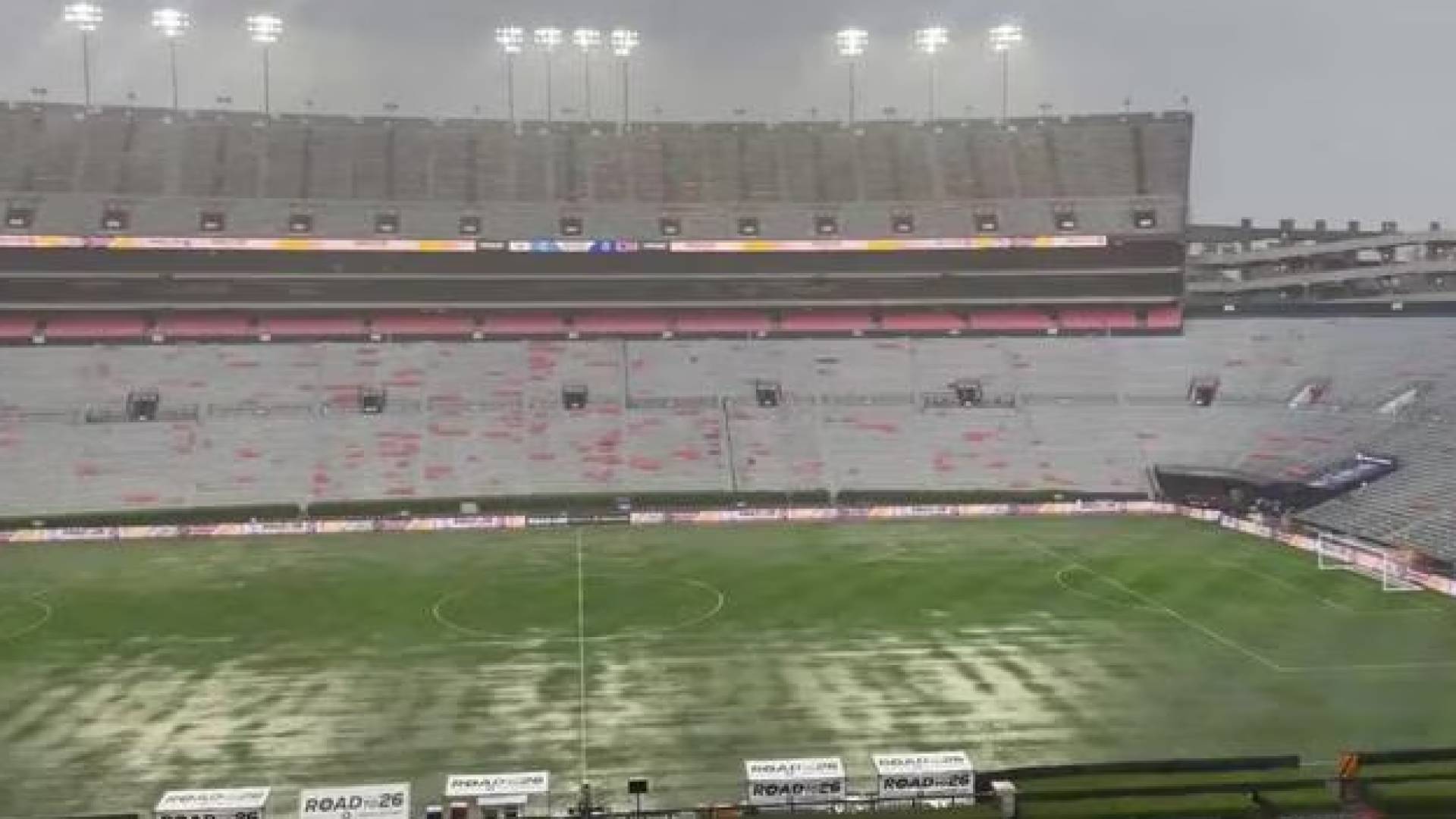
Heavy rain poured across Alabama on June 9, flooding sections of Jordan-Hare Stadium just hours before Argentina’s international friendly against Iceland.
Videos shared online showed water accumulating in concourses and seating areas, while streams of rainwater cascaded down sections of the stands ahead of kickoff in Auburn.
Despite the severe weather, conditions improved in time for the match to proceed as scheduled. Stadium staff worked to clear affected areas and prepare the venue, allowing the game to go ahead without postponement.
Argentina secured a comfortable 3-0 victory over Iceland once play began.
LAS CATARATAS DE ALABAMA
— TyC Sports (@TyCSports) June 9, 2026
Hace 30 minutos que no para de llover de manera TORRENCIAL en Auburn, donde Argentina enfrenta a Islandia en menos de cuatro horas. pic.twitter.com/OtQd2bPE5q
Fan fears
Although Jordan-Hare Stadium will not host any official 2026 FIFA World Cup games, the scenes quickly sparked wider discussion among fans and analysts over stadium readiness and the challenges weather may present during major international tournaments hosted across North America.
Sports scientists and climate researchers have previously raised concerns about scheduling, particularly afternoon kickoffs during peak temperatures. Attention has focused on the planned 3 p.m. local kickoff time for the World Cup final in New York, with some experts warning that heat conditions could affect both player performance and spectator comfort.
Read more: Visas, weather, and a lethal 'snake zone': Inside the US World Cup nightmare
Studies examining historical Wet Bulb Globe Temperature (WBGT) data have suggested that a significant number of tournament fixtures could be played under conditions associated with elevated heat stress risks.
FIFA’s weather safety measures include mandatory cooling breaks during matches when temperature thresholds are reached. Tournament organizers also have options to introduce mitigation measures depending on venue conditions, including climate-controlled environments, shade zones, and additional hydration support.
The Alabama flooding incident added to broader conversations over how venues and infrastructure will adapt to increasingly unpredictable summer weather conditions during major sporting events.