Hezbollah leader Naim Qassem

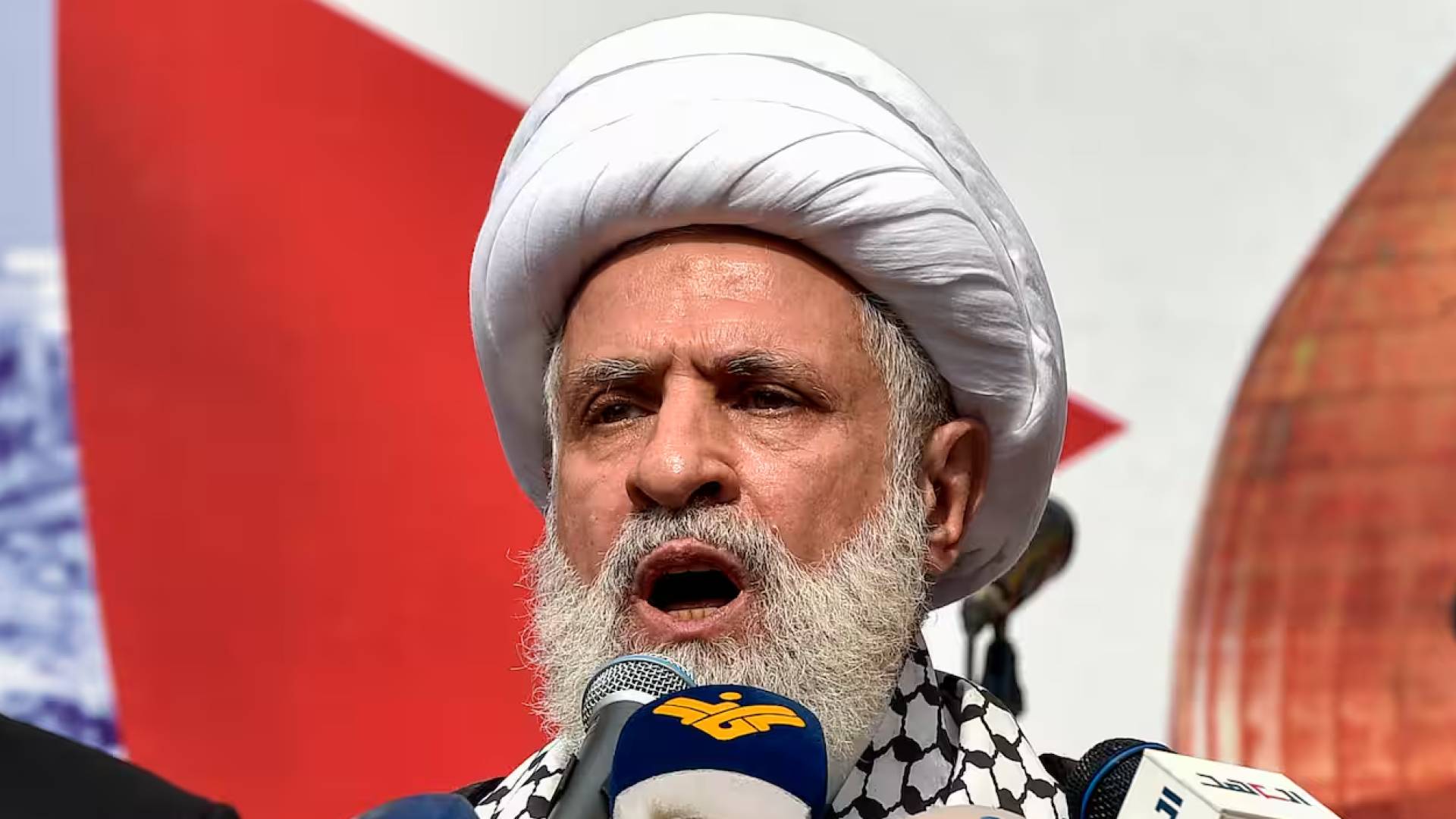
Hezbollah rejects US-brokered 'Israel'-Lebanon ceasefire
Note: AI technology was used to generate this article’s audio.
- 'Israel' says operations in Lebanon will continue
- Iran links broader deal to a Lebanon ceasefire
- Disputes complicate US regional diplomacy efforts
Promising efforts to halt the conflict in Lebanon and secure a broader peace deal between the United States and Iran faced a severe blow on Thursday, as the Hezbollah explicitly rejected a newly proposed ceasefire.
Compounding the diplomatic deadlock, 'Israel' countered with a firm declaration that it will not withdraw its forces from Lebanese territory, casting a dark cloud over US President Donald Trump's immediate plans to stabilize the Middle East.
Hezbollah rejection
The latest diplomatic roadblock materialized when Hezbollah leader Naim Qassem rejected a US-brokered pact that had been negotiated directly between 'Israel' and the sovereign Lebanese government to halt the ongoing hostilities.
A central point of contention remains the structure of the talks themselves; Hezbollah had not been included as a party to the negotiations.
While the group's leadership made its defiance clear, there was no immediate official response to the rejection from either the 'Israeli' or Lebanese governments.
The militia's refusal threatens a much larger diplomatic domino effect.
Tehran has previously made a functional ceasefire in Lebanon a non-negotiable condition for any sweeping peace agreement with Washington.
Furthermore, Iranian officials have suggested in recent days that the Islamic Republic could intervene directly in the conflict if 'Israel' maintains its military campaign across its northern border.
'Israel' vows to push forward
On the ground, the diplomatic maneuvering has done little to slow the kinetic conflict.
'Israel' kept up its intense strikes across southern Lebanon on Thursday.
Reinforcing the military's posture, 'Israeli' Defence Minister Israel Katz stated unequivocally that his country's forces would not withdraw or halt operations in Lebanon.
'Israeli' troops originally invaded the country in March, executing a campaign in parallel with the ongoing war with Iran.
Adding to the rigid terms, the commander of Iran's Revolutionary Guards Quds Force -the entity that originally established Hezbollah in 1982- weighed in on the gridlock, asserting that 'Israel' must, at a bare minimum, withdraw its forces back to the exact positions it held before the war began.
Trump maintains optimism
The sudden breakdown on both sides creates a complex obstacle for the White House, which has been aggressively pushing to de-escalate the multi-front regional war.
In Washington, President Trump appeared to brush aside the immediate friction, telling reporters he still believed tangible progress was being made in Lebanon.
Emphasizing his desire to see a diplomatic resolution, Trump added that the country deserved to have peace, noting, “It’s been going on for a long time, you know.”