

Day 98 | Trump says he would be ‘honoured’ to meet Iran’s supreme leader
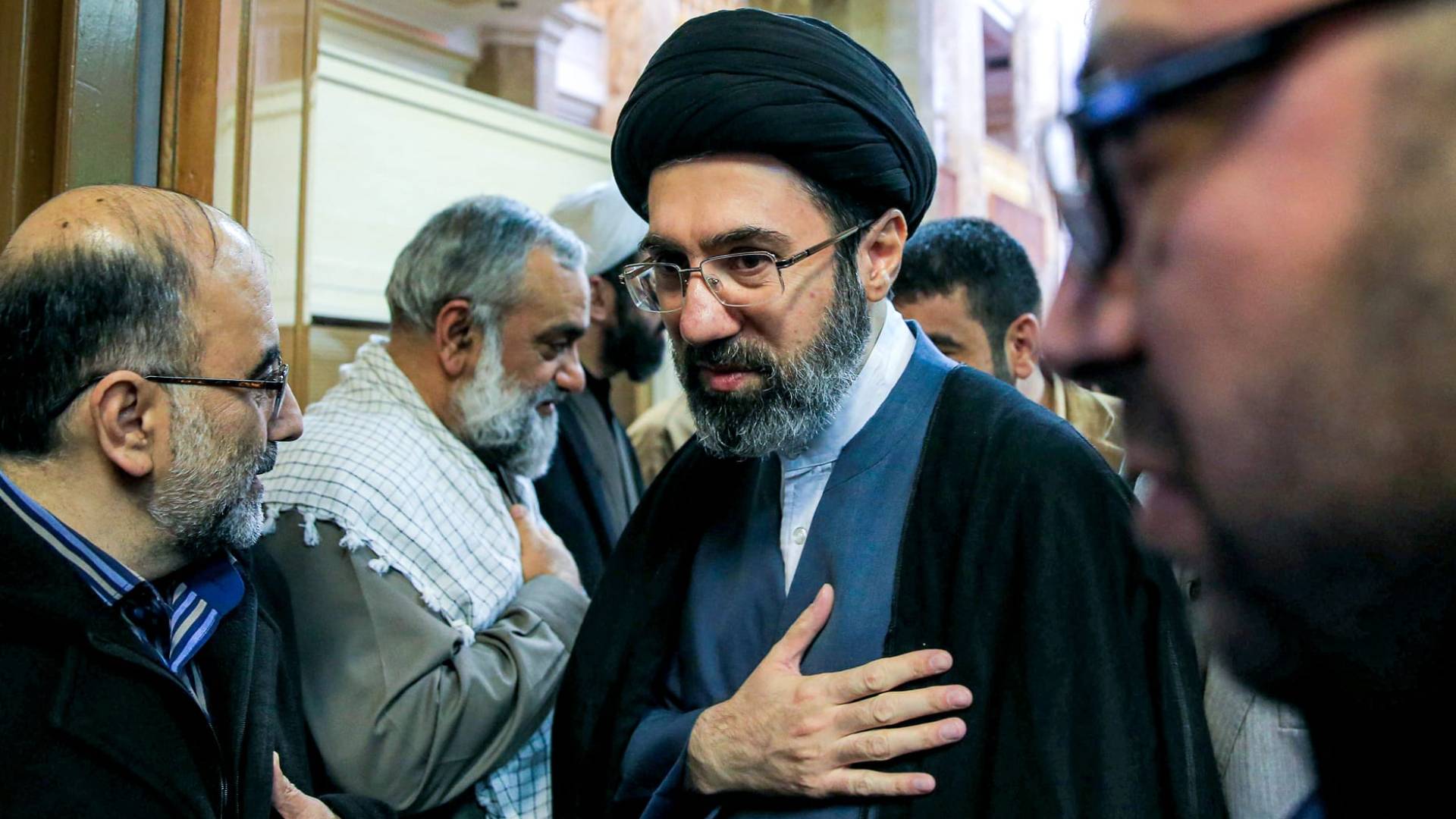
US President Donald Trump said he would be "honoured" to meet Iran’s Supreme Leader Mojtaba Khamenei if a deal is reached between Washington and Tehran, adding that he would be "respectful" and would be open to such a meeting.
The US Central Command (CENTCOM) said 127 commercial vessels have been redirected due to the blockade of Iranian ports, while six ships have been disabled since the measures were imposed.
Meanwhile, 'Israeli' forces launched raids on the southern Lebanese towns of Kaouthariyet al-Ruz, Safad al-Battikh and Ain Qana, in addition to a residential area east of the city of Tyre.
Hezbollah said it struck and destroyed an 'Israeli' Merkava tank with a missile near Beaufort Castle in southern Lebanon.
French President Emmanuel Macron voiced support for the Lebanon ceasefire after an agreement was announced in Washington, calling for all weapons to be placed under the authority of the Lebanese army.
Thread ended
This live thread has ended. Follow our online coverage of day 99 of the war.
Read more: Day 99 | Iran dismisses idea of Trump meeting supreme leader as talks stall
Iran launches drones toward Strait of Hormuz: CNN
Iran has launched multiple drones toward the Strait of Hormuz, according to a CNN report citing a US official.
The US military shot down at least four, the official added.
US envoy confirms Iranian footballers granted visas for World Cup
Iran’s football squad has been granted visas to play in the World Cup, US ambassador to Turkey Tom Barrack confirmed in a message on X on Friday.
“Proud of our outstanding team at the US Embassy in Ankara for their work processing visas for Iran’s national football team on their road to the @FIFAWorldCup in the United States,” he said, commenting on a news report that Iran’s World Cup players have been granted the visas to enter the US.
“Sports transcends borders, and we look forward to welcoming competitors and fans from around the world,” the ambassador said.
The Iranian team is due to fly from Turkey to Spain on Saturday before travelling on to their base camp in Mexico, which has issued visas to the squad.
The team will be based in Mexico during the tournament in North America, but all three of their group stage matches are due to be held in the US.
They were originally due to be based in the US but switched their camp to Mexico due to the tensions between them and the United States over the war in the Middle East.
The two countries have been at war since the US and ‘Israel’ began bombing Iran at the end of February, although currently a fragile ceasefire is being observed.
Iran begin their World Cup campaign against New Zealand on June 16 in Los Angeles.
They will play further group matches against Belgium, also in LA, and Egypt in Seattle.
Lebanon says ‘Israeli’ strike kills 5 including woman, paramedic
Lebanon's health ministry said an ‘Israeli’ strike in the south on Friday killed five people including a woman and an emergency worker, condemning "the targeting of paramedics carrying out rescue operations".
"The Israeli enemy strike on the town of Zebdine in the Nabatieh district killed five people including a woman, and a paramedic from the Risala Association, and wounded two people including a paramedic," a ministry statement said, referring to emergency responders affiliated with Hezbollah ally the Amal movement.
US and Iran “still at odds” regarding potential peace agreement: Axios
US President Donald Trump's envoys, Steve Witkoff and Jared Kushner, made an unannounced visit to the national laboratory in Oak Ridge on Thursday to meet nuclear experts who could play a role in future negotiations with Iran, according to Axios, citing two US officials.
Axios reported that the White House is seeking a memorandum of understanding with Iran aimed at extending a ceasefire and launching detailed talks on Tehran's nuclear program.
US officials said the experts could help develop plans for handling Iran's enriched uranium stockpile, imposing further limits on enrichment, and verifying compliance with any future agreement.
The report said Witkoff and Kushner recently reached preliminary terms with Iranian counterparts on a 60-day framework that would extend the ceasefire, reopen the Strait of Hormuz, allow Iranian oil sales, and begin discussions on nuclear restrictions.
According to the officials cited, Washington has received positive signals from Iranian negotiators, though internal divisions within Iran could complicate progress toward a broader deal.
The two sides are “still at odds on several details,” and it “remains unclear” whether an agreement will be reached, the report adds.
Iran envoy says discussing ‘new conditions’ for Strait of Hormuz with Oman
Iran’s ambassador to Russia, Kazem Jalali, said the future of the strategically important Strait of Hormuz will be determined jointly by Tehran and Muscat, signaling potential changes to how the key Gulf shipping route is managed.
In remarks to Russian newspaper Izvestia, Jalali said the strait would remain open but under “new conditions” that would be decided by Iranian and Omani authorities. He added that discussions on the issue are ongoing and that the outcome will become clearer in the future.
The comments come as Iran maintains that any long-term agreement with the United States to end the conflict must preserve Tehran’s role in overseeing the waterway. Washington has opposed that position, insisting that navigation through the strait must remain unrestricted.
The administration of Donald Trump has also rejected Iran’s proposal to impose transit fees on vessels passing through the strait, arguing that international shipping should remain free of charge.
Netanyahu declares Lebanon ceasefire 'not finalized'
The proposed ceasefire agreement with Lebanon has not reached a final conclusion, 'Israeli' Prime Minister Benjamin Netanyahu told the Security Cabinet, signaling that intensive diplomatic negotiations have yet to yield a definitive truce.
The prime minister's caution was mirrored by 'Israeli' defense sources, who confirmed that the security establishment has not yet received any operational instructions to begin implementing a cessation of hostilities.
Netanyahu leans on Trump
According to leaked details from the Security Cabinet meeting broadcast by the 'Israeli' Public Broadcasting Corporation (Kan), Netanyahu emphasized a strategic preference for a political resolution over prolonged warfare.
“We prefer the diplomatic track with Lebanon,” Netanyahu reportedly stated, while heavily highlighting the pivotal role of Washington in the ongoing process.
Describing US President Donald Trump as a "strategic partner," Netanyahu urged his cabinet to allow ample time and space for the American-brokered negotiations to materialize.
Acceptable terms or expanded operations
Concurrently, 'Israeli' military Chief of Staff Eyal Zamir provided a pragmatic assessment of the battlefield timeline, indicating that a swift resolution under the right parameters would be ideal.
"If it is possible to reach a ceasefire with Lebanon under acceptable conditions, it is better to do it now rather than a month from now," Zamir stated.
However, the military chief clarified that the armed forces are not letting their guard down while political maneuvers play out.
Zamir stressed that the 'Israeli' military's next steps in Lebanon will be strictly dictated by the political echelon.
He affirmed that while they wait for definitive policy choices, the military remains fully prepared and structurally poised to expand its ground and aerial operations north of the border if negotiations collapse.
Putin denies providing weapons to Iran
Russian President Vladimir Putin announced on Friday that Moscow remains actively prepared to work with all parties involved in the Middle East conflict, confirming that Russia's specific proposal to transfer Iran's enriched uranium stockpiles out of the country is still an active diplomatic option.
Uranium proposal remains open
In a series of statements, Putin emphasized Russia’s ongoing willingness to act as a diplomatic mediator amid heightened regional friction.
He explicitly noted that Russia’s previous proposal regarding the transfer and oversight of Iran’s enriched uranium reserves has not been withdrawn and remains a viable pathway toward de-escalation, should the negotiating parties choose to utilize it.
No arms supplied to Iran
Addressing the international speculation regarding Moscow's military relationship with Tehran, Putin clarified Russia's defense posture.
He stated unequivocally that Russia has not supplied Iran with any weaponry during the current conflict.
Furthermore, the Russian President emphasized that Tehran has not requested any such military hardware or arms provisions from Moscow.
Three 'Israeli' officers wounded in southern Lebanon
Three 'Israeli' military officers have been wounded -two severely- following separate security incidents in southern Lebanon over the last 24 hours, the military announced on Friday.
Drone strike severe injuries
The first incident occurred on Thursday, when an 'Israeli' military officer sustained severe injuries following the impact of a "suspicious aerial target" -the military’s standard terminology for an explosive drone or unmanned aerial vehicle (UAV)- in southern Lebanon.
Close-quarters engagement
The escalation continued into Friday morning during a separate operation. According to the 'Israeli' military, forces engaged in a fierce, close-quarters firefight with militants.
During the direct encounter, one 'Israeli' military officer was severely wounded, while a second officer sustained light injuries.
The military confirmed that all three officers involved in both incidents were promptly evacuated from the field to receive medical treatment at a hospital.
Their respective families have been formally notified.
The casualties come amid intensified cross-border friction and ongoing ground operations north of the border.
Ireland bans entry to Ben Gvir, Smotrich
- Irish PM Martin condemns ministers’ rhetoric toward Palestinians
- Flotilla incident helped accelerate the decision
- Ireland joins several European states imposing entry bans
In a major diplomatic escalation, Ireland announced on Friday that it has officially banned 'Israeli' National Security Minister Itamar Ben Gvir and Finance Minister Bezalel Smotrich from entering the country.
The decision follows intense condemnation from Irish leadership regarding the ministers' behavior and hostile rhetoric toward pro-Palestinian activists and the Palestinian population at large.
According to a Justice Ministry statement, Irish Justice Minister Jim O'Callaghan has formally instructed immigration officers to refuse entry to both Ben Gvir and Smotrich should they attempt to travel to the state.
The catalyst: Flotilla mockery
The momentum to bar the two hardline officials reached a boiling point after an incident last month involving a Gaza-bound humanitarian aid flotilla.
After 'Israeli' soldiers intercepted the vessel and seized the pro-Palestinian activists on board, Ben Gvir publicly mocked the detainees.
The display prompted Irish Taoiseach Micheál Martin to declare that Ireland would take concrete action to block 'Israeli' officials deemed to be actively fomenting conflict in Gaza.
Speaking to reporters during a political summit in Montenegro on Friday, Martin pulled no punches when describing the political ideology of the two men, who serve as the cornerstone of Prime Minister Benjamin Netanyahu’s right-wing coalition government.
"The two ministers' behaviour, not just in the context of the flotilla, but their consistent statements... essentially amount to a desire to see the elimination of Palestinians from Palestine," Martin said.
He further signaled that Ireland would push for broader international penalties, adding, "In my view, their behaviour justifies sanctions at the EU level as well."
Diplomatic fallout
With this move, Ireland adds its name to a rapidly expanding list of European nations seeking to isolate the far-right elements of the 'Israeli' cabinet.
Britain originally barred both Ben Gvir and Smotrich from entry in June 2025.
Last month, France enacted a similar ban against Ben Gvir, while Spain and Slovenia have also implemented corresponding entry restrictions.
The travel bans mark the latest chapter in the severe fraying of ties between Dublin and Jerusalem.
Ireland has consistently stood out as one of the most vocal critics of 'Israel'’s military campaign in Gaza, which began following the October 2023 events.
Following Ireland's formal recognition of the Palestinian state in 2024, 'Israeli' Foreign Minister Gideon Sa'ar retaliated by ordering the complete closure of the 'Israeli' embassy in Dublin, explicitly citing Ireland's "extreme anti-'Israel' policies." Friday's newly enacted border restrictions ensure that relations between the two nations will remain at an all-time low for the foreseeable future.
Iran denies reports about agreeing to transfer enriched uranium abroad
- Nuclear issues postponed to later rounds of talks
- Tehran says US must act first on core agreements
An informed source close to Iran's negotiating team has flatly rejected widespread media reports claiming that Tehran has agreed to transfer a portion of its enriched uranium stockpiles to a third country, calling the assertions entirely incorrect.
The denial comes after external media reports alleged that Iran had officially consented to move part of its uranium reserves to a mutually agreed-upon third-party nation.
Nuclear files excluded from current talks
Speaking to a political correspondent for the Fars News Agency on Friday, the source clarified that the scope of the ongoing negotiations does not currently encompass the nuclear file.
According to the source, matters directly related to Iran's nuclear program are not being raised at this stage of the process, with both sides agreeing to defer those complex reviews to later rounds of dialogue.
"The issue of transferring uranium stockpiles is simply not on the current agenda of the negotiations," the source stated.
Tehran demands concrete US steps
The Iranian official emphasized that before any sensitive nuclear concessions can be entertained, Washington must move first.
The source noted that the American side is required to take specific, definitive actions and that both parties must achieve clear and finalized agreements on several fundamental, underlying issues before the talks can progress to peripheral matters.
The source concluded by reiterating that the published reports concerning Iran's alleged compliance with a uranium transfer are fundamentally "inaccurate," signaling that Tehran is holding its ground on its strategic assets until its core demands are met.
Iranian military fires warning shots at two US destroyers
The Iranian military announced that its naval forces fired warning shots toward two US Navy destroyers, forcing the American warships to retreat from the Gulf of Oman and alter their course toward the Indian Ocean.
Hezbollah rejects US-brokered 'Israel'-Lebanon ceasefire
- 'Israel' says operations in Lebanon will continue
- Iran links broader deal to a Lebanon ceasefire
- Disputes complicate US regional diplomacy efforts
Promising efforts to halt the conflict in Lebanon and secure a broader peace deal between the United States and Iran faced a severe blow on Thursday, as the Hezbollah explicitly rejected a newly proposed ceasefire.
Compounding the diplomatic deadlock, 'Israel' countered with a firm declaration that it will not withdraw its forces from Lebanese territory, casting a dark cloud over US President Donald Trump's immediate plans to stabilize the Middle East.
Hezbollah rejection
The latest diplomatic roadblock materialized when Hezbollah leader Naim Qassem rejected a US-brokered pact that had been negotiated directly between 'Israel' and the sovereign Lebanese government to halt the ongoing hostilities.
A central point of contention remains the structure of the talks themselves; Hezbollah had not been included as a party to the negotiations.
While the group's leadership made its defiance clear, there was no immediate official response to the rejection from either the 'Israeli' or Lebanese governments.
The militia's refusal threatens a much larger diplomatic domino effect.
Tehran has previously made a functional ceasefire in Lebanon a non-negotiable condition for any sweeping peace agreement with Washington.
Furthermore, Iranian officials have suggested in recent days that the Islamic Republic could intervene directly in the conflict if 'Israel' maintains its military campaign across its northern border.
'Israel' vows to push forward
On the ground, the diplomatic maneuvering has done little to slow the kinetic conflict.
'Israel' kept up its intense strikes across southern Lebanon on Thursday.
Reinforcing the military's posture, 'Israeli' Defence Minister Israel Katz stated unequivocally that his country's forces would not withdraw or halt operations in Lebanon.
'Israeli' troops originally invaded the country in March, executing a campaign in parallel with the ongoing war with Iran.
Adding to the rigid terms, the commander of Iran's Revolutionary Guards Quds Force -the entity that originally established Hezbollah in 1982- weighed in on the gridlock, asserting that 'Israel' must, at a bare minimum, withdraw its forces back to the exact positions it held before the war began.
Trump maintains optimism
The sudden breakdown on both sides creates a complex obstacle for the White House, which has been aggressively pushing to de-escalate the multi-front regional war.
In Washington, President Trump appeared to brush aside the immediate friction, telling reporters he still believed tangible progress was being made in Lebanon.
Emphasizing his desire to see a diplomatic resolution, Trump added that the country deserved to have peace, noting, “It’s been going on for a long time, you know.”
Oman says Mina Al Fahal oil exports resume, following drone strike
- Reports had claimed loading halted after drone blast
- Terminal exports up to 900,000 barrels daily
- Incident comes amid heightened Gulf tensions
Petroleum Development Oman announced on Friday that maritime operations and oil loading at the vital Mina Al Fahal port are functioning normally.
The official statement directly addresses and defuses market anxieties triggered by earlier reports of an export halt.
Explosion reported
The state company’s reassurance followed statements from three separate industry sources who told Reuters earlier on Friday that oil loading operations had been abruptly suspended.
According to individuals familiar with the matter, an explosion had rocked the area between single-buoy mooring (SBM) 1 and 2 berths.
The sources attributed the blast to an alleged drone attack, though the exact timing of the strike remained immediately unclear.
Despite the initial reports of a shutdown, shipping data from LSEG on Friday indicated that several massive supertankers remained visibly anchored just off the coast of the port, signaling ongoing maritime presence.
Omani energy chokepoint
Any disruption to the Mina Al Fahal terminal carries significant weight for global energy markets. The strategic port serves as Oman's primary maritime gateway for fossil fuels, responsible for exporting a substantial 800,000 to 900,000 barrels of crude oil per day.
Context of escalation
The reported scare at the Omani terminal coincides with highly volatile state-to-state friction in the surrounding waters. On Wednesday, Iranian state media claimed that Tehran's forces had successfully targeted a US military ship operating as a "control and command centre" as it neared Iranian territorial waters in the Gulf of Oman.
The US military has vigorously pushed back against Iran's narrative, with US Central Command issuing a formal denial of any such attack on its naval assets.
Palestinian envoy urges Trump to stop Netanyahu's annexation plans
Palestinian Ambassador to the United Nations Riyad Mansour on Thursday urged US President Donald Trump to take immediate action to halt plans by 'Israel' to annex Palestinian territories.
Speaking at a joint press conference alongside representatives of the Arab Group and the Organization of Islamic Cooperation at the United Nations, Mansour said Washington possesses the leverage needed to change the current trajectory on the ground.
Mansour argued that Trump has both the authority and the tools necessary to restrain Israeli Prime Minister Benjamin Netanyahu and prevent further escalation across the region.
He said such intervention could help move the situation toward peace and justice rather than prolonged instability.
The Palestinian envoy also referenced previous remarks by Trump, noting that the US president had reportedly told Netanyahu to stop "messing around in Lebanon" and to end what he described as "madness."
Addressing 'Israeli' authorities directly, Mansour said annexation has no legal basis under international law.
"You know that you have no right to annex the land," he said.
The Arab Group at the United Nations expressed what it described as deep concern over the rapid expansion of settlements and escalating violence against Palestinians.
Speaking on behalf of the group, Saudi Ambassador Abdulaziz Alwasil said 'Israel' is pursuing policies that amount to accelerated annexation and the systematic dismantling of Palestinian rights.
He argued that the measures are not isolated incidents but part of a coordinated strategy aimed at entrenching permanent control, altering demographic and geographic realities, and undermining the prospects of an independent and territorially contiguous Palestinian state.
The Organization of Islamic Cooperation echoed calls for urgent international intervention to halt annexation measures in the occupied Palestinian territories.
Fikriye Aslı Güven, speaking on behalf of the organization, urged the UN Security Council to take immediate and effective action.
She called for an end to settlement expansion, annexation activities, and forced displacement throughout the occupied territories, including East Jerusalem.
The organization also stressed the need to ensure accountability in accordance with international law and relevant international resolutions.
Iran's Araghchi says Hormuz decisions made jointly with Oman
Iranian Foreign Minister Abbas Araghchi said the management of the Strait of Hormuz is a joint responsibility between Iran and Oman, stressing that decisions regarding the strategic waterway are made exclusively by the two countries.
Speaking to Iranian state television, Araghchi said Tehran and Muscat would manage the strait in accordance with international law while consulting with neighboring states on related issues. However, he emphasized that the final decision-making authority rests with Iran and Oman.
The foreign minister also said communication with Iran’s Supreme Leader Mojtaba Khamenei remains direct and ongoing, highlighting close coordination between the country’s diplomatic leadership and top political authorities.
Hezbollah hits 'Israeli' troops with wave of attacks in southern Lebanon
Hezbollah said its fighters launched a series of attacks against 'Israeli' forces operating inside southern Lebanon on Thursday, targeting troop concentrations, military positions and vehicles across several areas.
In a statement, the group said it struck gatherings of 'Israeli' soldiers in Yohmor al-Shaqif, Rashaf, al-Qantara and Khiam using rocket barrages and attack drones. Hezbollah added that some positions were targeted multiple times throughout the day.
The group also identified the area surrounding the historic Beaufort Castle as a key battleground, claiming it carried out artillery strikes, rocket attacks and drone operations against 'Israeli' command posts and troop concentrations. Hezbollah further claimed that several Merkava tanks were destroyed during the attacks.
US House rejects Lebanon war powers resolution
The US House on Thursday rejected a Democrat-led Lebanon war powers resolution, defeating it on a 92-324 vote.
The resolution, introduced by progressive Rep. Rashida Tlaib, would have directed the president to remove US armed services from the country within seven days of the measure’s adoption.
House Democratic leaders said in a statement earlier Thursday they would oppose it, and noted “there are no U.S. servicemembers involved in combat operations or hostilities in Lebanon.”
They stated their preference for a different, more tailored measure, also introduced by Tlaib. This resolution would remove US troops from “any hostilities in Lebanon” and states that the resolution may not be construed to prevent or limit security cooperation with the Lebanese Armed Forces or the protection of diplomatic facilities.
Trump says if Iran kills US troops "it would be a good reason" to restart the war
US President Donald Trump, asked today if Iran killing US troops that would cross a redline, said that it would be a good reason to restart the war.
“Well, it would be a good reason. I’d be honest with you,” the president said while taking questions from the Oval Office. “If they killed US troops, I think I would do that very quickly. Yeah, that’s a very interesting question,” Trump said.
Day 97 of the US-‘Israeli’ war on Iran
For coverage of the previous day - visit the link below.
Read more: Day 97 | Trump projects weekend breakthrough; as Iran denies 'tangible progress'


