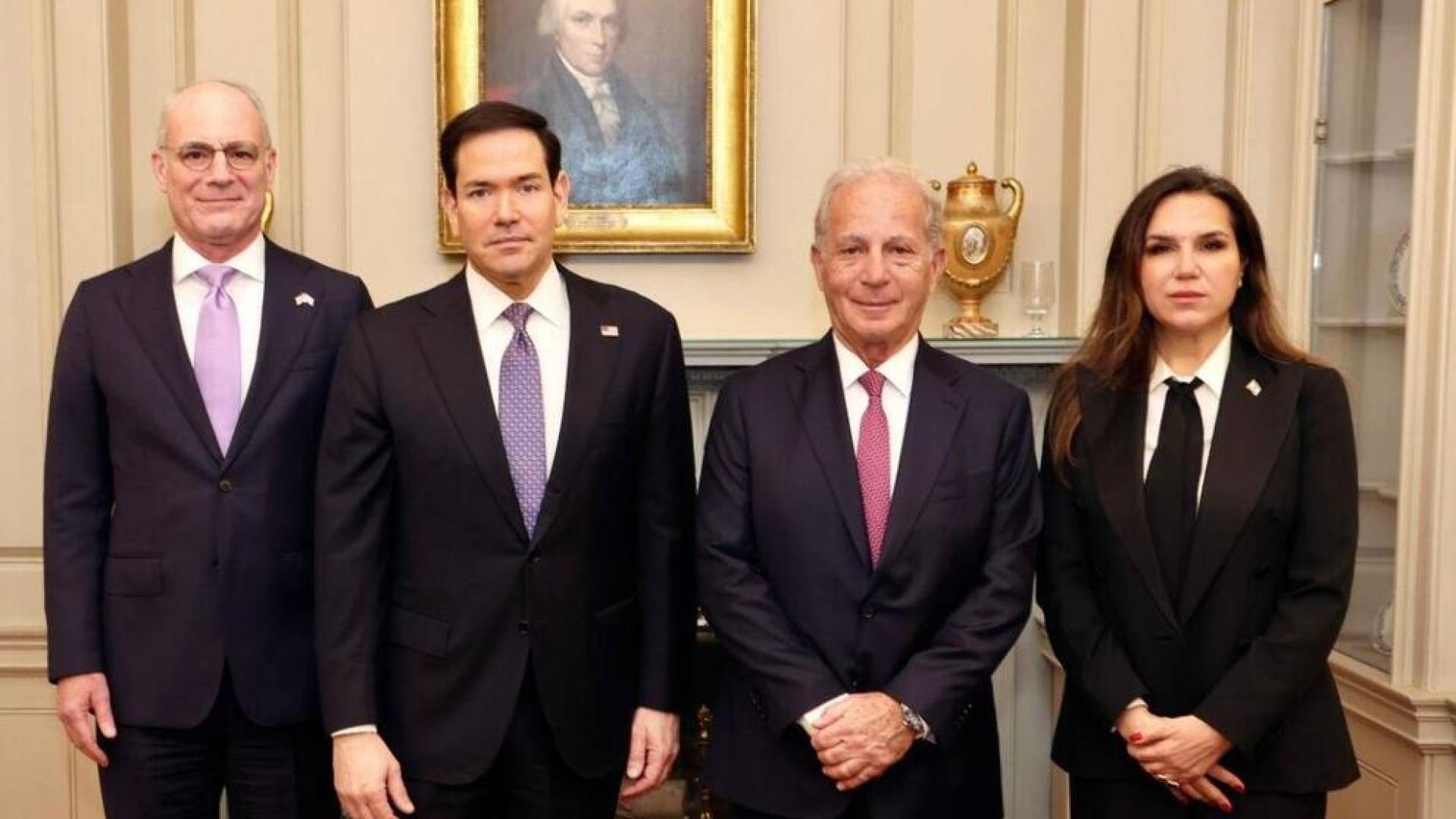
United States brokers 'Israel'-Lebanon ceasefire agreement
Note: AI technology was used to generate this article’s audio.
- Truce tied to halt of Hezbollah fire south of Litani
- Lebanese Army to assume control of designated pilot zones
- Parties reject regional interference and proxy activity
- Direct US-led talks to resume week of June 22
In a major diplomatic breakthrough, the United States has successfully brokered a ceasefire agreement between the governments of 'Israel' and Lebanon following intense, high-level negotiations, according to a statement released by the US State of Department.
The agreement was reached during the fourth trilateral meeting convened by the US on June 2 and 3, 2026, establishing a framework to halt hostilities and pave the way toward a comprehensive peace and security accord.
Truce mechanism
The implementation of the ceasefire is tightly bound to strict security prerequisites on the ground.
According to the joint diplomatic framework, the truce is entirely contingent upon a complete cessation of all Hezbollah fire, alongside the total evacuation of all Hezbollah operatives from the South Litani Sector.
To ensure a sustainable transition of authority, both sides agreed under American guidance to swiftly advance the creation of specialized "pilot zones." Within these designated areas, the Lebanese Armed Forces (LAF) will take exclusive control of the territory, effectively locking out all non-state actors.
Building upon prior foundational discussions held at the Pentagon on May 29, the delegations mapped out a broader security framework focused on the dismantlement of non-state armed groups and the systematic prevention of their re-emergence to permanently guarantee the sovereignty, security, and territorial integrity of both nations.
Sovereignty reaffirmed
A core tenet of the trilateral summit was the preservation of state-to-state diplomacy.
All participating countries strongly reaffirmed that the future of the bilateral relationship must be decided strictly by the two sovereign governments of 'Israel' and Lebanon.
Consequently, they firmly rejected any attempt by any outside state or non-state actor to hold Lebanon’s future hostage.
The parties issued a unified rebuke against external interference, collectively condemning Iran’s attacks on countries in the region.
They blasted Tehran's ongoing activities -including its support for regional proxies and other acts of aggression- for actively undermining stability throughout the Middle East.
National stances
Throughout the proceedings, the United States reiterated its unwavering support for both governments to fully exercise their sovereignty.
Washington underscored that any valid agreement to cease hostilities must be reached directly between the two sovereign governments under US brokerage, completely ruling out any separate or back-channel diplomatic tracks.
To back this up, the US emphasized its intent to financially and logistically support the Lebanese Armed Forces to improve their operational capacity.
US mediators also pointedly highlighted a June 2 statement by Secretary Rubio, who declared that Hezbollah is not just an enemy of 'Israel' and America, but fundamentally "an enemy of Lebanon."
The two neighboring states presented aligned commitments despite their respective security priorities:
- The 'Israeli' Position: 'Israel' reaffirmed that its long-term national security and territorial integrity are entirely dependent upon the total disarmament of Hezbollah and the complete dismantlement of its infrastructure across all of Lebanon. It emphasized that direct, U.S.-led negotiations are the only viable path to achieve a durable peace.
- The Lebanese Position: Lebanon reasserted the absolute necessity for mutual respect regarding internationally recognized borders and called for the urgent, full implementation of the cessation of hostilities. Championing the principles of territorial integrity, Lebanon committed to upgrading the capacity of the LAF, with American backing, to assert effective state control over the entirety of its country.
Looking ahead
Both 'Israel' and Lebanon explicitly reaffirmed that they harbor no hostile intentions toward one another. They have formally committed to continuing direct, bilateral negotiations to build mutual confidence, resolve all outstanding territorial and security issues, and finalize a comprehensive pact.
To maintain this momentum, the two parties have agreed to officially reconvene both the political and security negotiation tracks during the week of June 22.
The United States has agreed to continue facilitating all communications between the two governments in the interim period.