

Day 87 | Trump says US will not “rush into a deal” with Iran
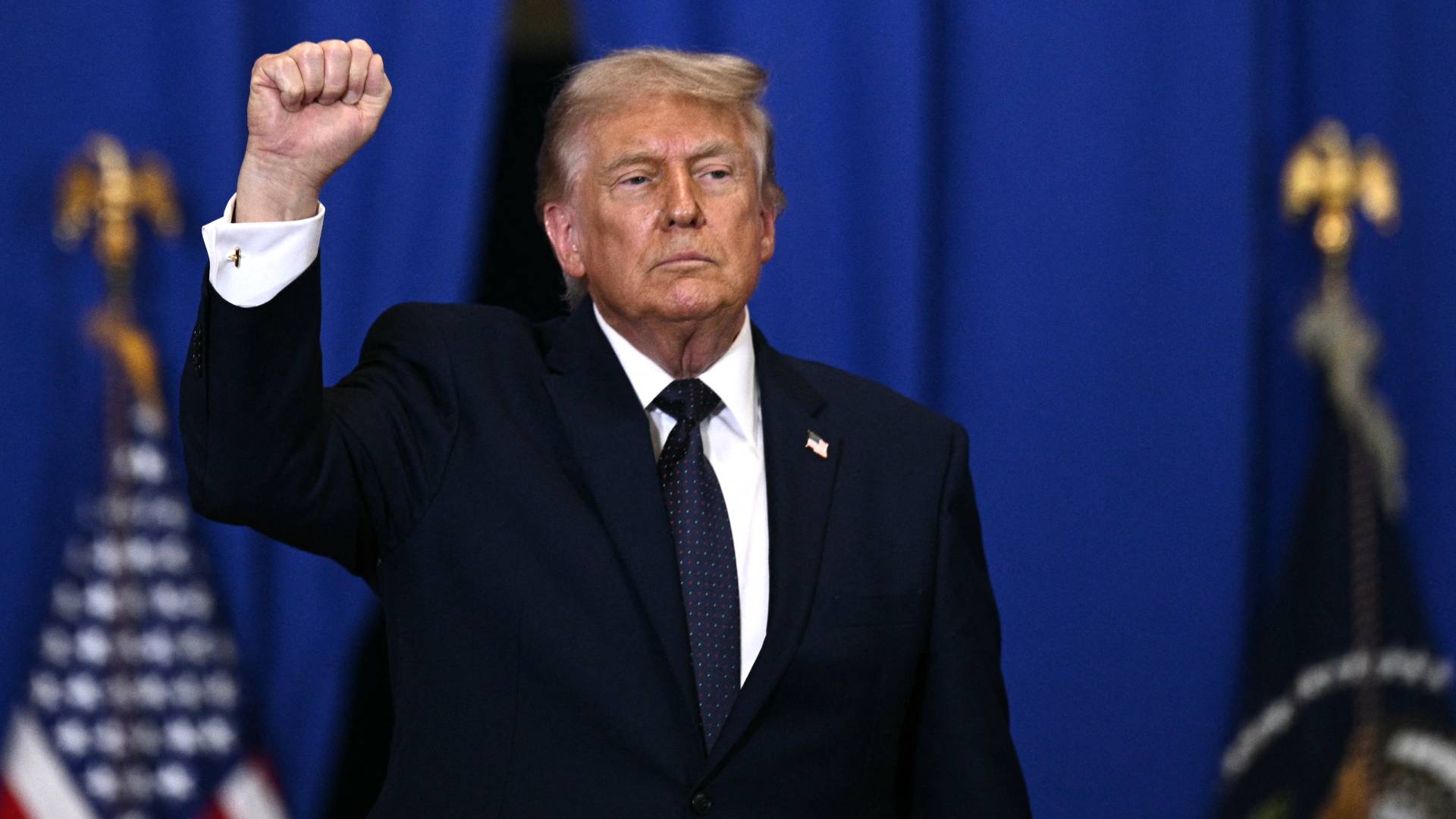
President Donald Trump said Sunday that he had told US negotiators "not to rush into a deal" with Iran amid anticipation -- and mounting criticism -- of an agreement to end the war in the Middle East.
"The negotiations are proceeding in an orderly and constructive manner, and I have informed my representatives not to rush into a deal in that time is on our side," Trump wrote on his Truth Social account.
"The Blockade will remain in full force and effect until an agreement is reached, certified, and signed," he wrote.
The United States has imposed a blockade of Iranian ports since April 13 after Tehran virtually halted traffic through the economically vital Strait of Hormuz in response to the US-‘Israeli’ attacks on Iran that began February 28.
“Both sides must take their time and get it right,” Trump wrote in the same Truth Social post, while slamming the 2015 nuclear deal that former president Barack Obama agreed with Iran.
"Our relationship with Iran is becoming a much more professional and productive one. They must understand, however, that they cannot develop or procure a Nuclear Weapon or Bomb," Trump wrote.
While the White House has not released aspects of the deal, Iran Foreign Ministry spokesman Esmaeil Baqaei said Saturday on state television that the two sides were nearing "a memorandum of understanding, a kind of framework agreement composed of 14 clauses" in "a trend toward rapprochement."
According to news outlet Axios, a possible agreement would extend the current ceasefire by 60 days, during which the Strait of Hormuz would be reopened, Iran would freely sell oil, and negotiations would be held on Iran’s nuclear program.
It cited a senior US official as saying there are still details "to work out," and the "slow and opaque" nature of Iran's decision-making system could delay an agreement by another few days.
"Our understanding is that the Supreme Leader, Mojtaba Khamenei, has endorsed the broad template of the deal," the official said. "Whether this becomes an agreement is still an open question."
Iran’s Araghchi voices support for Hezbollah amid regional tensions and US-Iran talks
Iranian Foreign Minister Abbas Araghchi has issued messages of support to Lebanese officials and Hezbollah leaders, reaffirming Tehran’s backing for what it describes as Lebanon’s “resistance” and its stance against 'Israel', according to statements reported by regional media.
In separate messages, Araghchi congratulated Lebanese Parliament Speaker Nabih Berri and Hezbollah Secretary-General Naim Qassem on the anniversary of “Resistance and Liberation Day,” which marks the 'Israeli' withdrawal from southern Lebanon in 2000.
Araghchi extended congratulations to the Lebanese government, people, and “resistance,” while emphasizing Iran’s continued support for Lebanon’s independence, sovereignty, and territorial integrity in the face of 'Israel'.
Washington Post reveals outlines of first phase of Washington-Tehran agreement
An emerging agreement between the United States and Iran could bring an end to the ongoing regional war and ease tensions across the Middle East, according to a report published by The Washington Post citing two regional officials and a US official familiar with the negotiations.
US President Donald Trump said over the weekend that the deal had been “largely negotiated” following calls with regional allies and a separate conversation with Israel, though officials cautioned that it remains unclear when the agreement could be finalized or implemented.
According to the report, Tehran has insisted throughout negotiations that any agreement must include an end to hostilities on all fronts following the military campaign launched 12 weeks ago by the United States and 'Israel' against Iran. The strikes reportedly killed several senior Iranian officials, including Supreme Leader Ayatollah Ali Khamenei.
Hezbollah explosive drones hit northern 'Israel' border areas; no injuries reported
Explosive drones launched by Hezbollah struck the northern 'Israeli' border community of Shomera and a nearby military zone on Monday amid a wider wave of aerial attacks targeting northern 'Israel', according to the 'Israeli' military.
The Israeli Occupation Forces said several additional “suspicious aerial targets” were detected during multiple alerts but were later lost from radar, indicating they may have crashed or exited monitored airspace.
No injuries were reported in the incidents, which remain under investigation by the military.
Qalibaf and Araqchi arrive in Doha for crucial deal talks
Reuters reported that Iranian Parliament Speaker Mohammad Baqer Qalibaf and Foreign Minister Abbas Araqchi have arrived in the Qatari capital of Doha to discuss the potential finalized text of a landmark agreement between Tehran and Washington.
US-Iran MoU sidesteps nuclear deal, commits only to future talks: WP
- Iran says Hormuz Strait will reopen in phased stages.
- First phase includes mine clearance, ending US blockade, releasing frozen assets.
- MoU delays final nuclear agreement talks.
- More details on the deal expected later Monday.
The reopening of the critically strategic Strait of Hormuz will be executed via a multi-stage process, an Iranian official disclosed in a report published by The Washington Post.
According to the official, the landmark diplomatic framework established between Washington and Tehran relies on a carefully sequenced roadmap rather than an immediate resolution.
The first phase of the plan mandates the clearance of naval mines from the vital shipping lane, alongside the comprehensive lifting of the US naval blockade.
Concurrently, the initial phase requires the financial unfreezing and release of $12 billion in Iranian state assets.
Nuclear file deferred to future talks
The Iranian official sought to clarify the strict parameters of the current diplomatic text, confirming that the current Memorandum of Understanding (MoU) intentionally sidelines immediate nuclear restrictions.
The official stated that the MoU does not incorporate a finalized nuclear agreement. Instead, the document contains a foundational commitment and pledge by both parties to formally enter into separate negotiations regarding the nuclear file at a later, unspecified date.
A more comprehensive public disclosure regarding the diplomatic breakthrough is imminent.
The official noted that a formal announcement is expected to be issued today, which will provide the international community with further, intricate details regarding the exact mechanisms and timelines governing the Memorandum of Understanding.
Trump: Any Iran deal must be “great” or there will be none
- Trump says Iran deal talks have not started yet.
- He rejects the Obama-era JCPOA as a “disaster.”
- He blasts Democrats and several Republicans over criticism of his policies.
US President Donald Trump issued a fierce defense of his administration's prospective foreign policy strategy regarding Iran, while launching sharp broadsides against domestic political opponents.
Writing on his social media platform, Truth Social, Trump dismissed widespread commentary surrounding the potential diplomatic track.
He asserted that his critics are completely misinformed.
"I laugh at all of the Dumocrats, RINOS, and Fools who know nothing about the potential deal I am making with Iran, things that haven’t even been negotiated yet," Trump stated.
Opposing Obama deal
Trump outlined a rigid standard for any future diplomatic framework with Tehran, drawing a sharp contrast between his approach and that of previous administrations. He explicitly vowed that any new agreement would stand in total opposition to the 2015 Joint Comprehensive Plan of Action (JCPOA).
"The deal with Iran will either be a great and meaningful one, or there will be no deal. It will be the exact opposite of the JCPOA disaster negotiated by the failed Obama Administration, which was a direct and open path to a Nuclear Weapon for Iran. No, I don’t do deals like that!" Trump stated.
Targeting Bipartisanship detractors
Beyond the international parameters, Trump utilized the statement to highlight recent domestic political shifts, taking aim at specific lawmakers who have questioned his actions.
He labeled his detractors "weak and ineffective people" who "do nothing but create division and loss," ultimately branding them as "losers."
Among those singled out by the President were:
- Senator Thom Tillis: Described by Trump as a "failed Senator" who is "soon out of office."
- Bill Cassidy: Whom Trump noted "just suffered a massive Primary loss."
- Congressman Thomas Massie: Characterized as a "really bad Congressman" and a "major sleazebag" who Trump stated lost in a landslide to a "great American Patriot" endorsed by Trump following "tremendous disloyalty to his Party (and Country!)."
Trump concluded his remarks by broadening his criticism to "almost all Dumocrats," accusing them of losing their way, supporting bad policies, backing worse candidates, and maintaining a double standard by being "constantly critical of each and every fantastic win I have."
Iran’s parliament re-elects Mohammad Baqer Qalibaf as speaker
- Conservative lawmakers backed Qalibaf in majority vote.
- Re-election preserves conservative oversight of Pezeshkian’s government.
- Vote comes amid Iran’s push to end the war through mediation.
The Iranian Islamic Consultative Assembly has re-elected Mohammad Baqer Qalibaf as the Speaker of Parliament for a new legislative term.
Fars News Agency reported on Monday. Qalibaf secured his position at the helm of the legislature after winning a clear majority of lawmakers' votes during an internal, open session of parliament.
A leading figure within the fundamentalist conservative movement, Qalibaf will continue to guide the Islamic Republic’s legislative agenda.
His leadership comes at a highly critical juncture defined by deeply intricate domestic and foreign political challenges.
Preserving balance of power
Political analysts view Qalibaf's retention of the speakership as a pivotal move for the internal dynamics of the Iranian administration.
Despite the presence of President Masoud Pezeshkian -who is aligned with the reformist movement- the continuation of Qalibaf, who holds a military background in the Islamic Revolutionary Guard Corps (IRGC), actively reshapes and reinforces the state's internal "balance of power."
This structural arrangement guarantees that the ruling fundamentalist establishment maintains stringent oversight and strict monitoring capabilities over any future policy maneuvers initiated by the presidential government.
Sensitive political climate
The legislative vote unfolded in a highly sensitive climate, occurring just hours after major diplomatic updates from the executive branch.
The Iranian Foreign Ministry had recently declared that Tehran's immediate focus is centered on "ending the war and passing international mediations."
This diplomatic push coincides with reports carried by American media outlets indicating that Iran has put forward verbal concessions concerning its uranium enrichment program, adding a layer of strategic urgency to Qalibaf's legislative oversight role.
Iran says progress made in US talks, but no deal is imminent
- Iran says progress made, but no deal is near.
- Tehran says ending the war is its top priority, not nuclear talks.
- Draft agreement includes halting attacks on Lebanon.
- Iran says US positions shift constantly, offers no guarantees.
- Tehran coordinates Hormuz security with Gulf states, rejects transit toll claims.
Iranian Foreign Ministry Spokesperson Esmaeil Baghaei has provided a comprehensive update on indirect negotiations with Washington.
Revealing that while technical teams have successfully concluded discussions on several key files, a final agreement remains far from finalized.
Speaking at a press briefing, Baghaei cautioned against premature expectations of a diplomatic breakthrough, explicitly stating that "no one can say we are close to reaching an agreement."
He emphasized that the state's diplomatic apparatus is working meticulously to secure the best possible solutions to safeguard Iran's national interests.
Priority for peace, not Nuclear file
Tehran clarified its immediate diplomatic priorities, confirming a major structural shift in the parameters of the current talks.
"At this stage, we are not talking about the nuclear file. Our focus is entirely on ending the war." Baghaei stated.
A central component of this effort is ensuring regional stability.
Baghaei formally confirmed that an explicit clause mandating a complete halt to all military aggression against Lebanon has been successfully integrated into the draft agreement.
This diplomatic momentum and the structural changes observed over the past few weeks are the direct result of ongoing high-level mediation led by Pakistan alongside other regional countries.
Distrust Washington, retaliation warnings
Despite the ongoing negotiations, the Foreign Ministry expressed deep skepticism regarding the reliability of the United States as a diplomatic partner.
Baghaei noted that Washington continuously shifts its political positions, sometimes radically altering its stance within the span of a few hours.
Consequently, Tehran emphasized that there are no concrete guarantees that the US will honor its vows, declaring that Iran remains indifferent to American threats and is focusing solely on locking in its own tangible interests.
On the military front, Baghaei delivered a stern warning to adversaries.
While noting that Iran reserves the right to choose the exact timing and parameters to respond to hostile actions -as it has done historically- he warned that "every aggressive step will face an Iranian response."
Hormuz governance
Addressing the volatile maritime landscape, Baghaei stated that Tehran is maintaining active communication channels with all littoral states bordering the Strait of Hormuz to preserve security and protect mutual interests.
The spokesperson sought to clarify Iranian policy regarding maritime traffic through the vital chokepoint, explicitly stating that Iran does not intend to impose arbitrary transit tolls on international shipping lanes.
Instead, any proposed financial levies are strictly intended to cover environmental protection protocols and safety measures.
Concluding the briefing, Baghaei leveled criticism at Western bodies, asserting that external military aggression was the sole catalyst that forced the closure of the Strait of Hormuz.
He urged the European Union to uphold international law, reiterating that maritime stability can only return once the underlying hostile actions against the region are permanently ceased.
Iran executes Abbas Akbari over coup attempt, shooting security forces
- Iran executes Abbas Akbari Faizabadi over alleged coup role.
- He was accused of armed attacks on security forces in Isfahan.
- Convicted over national security charges.
- Supreme Court upheld sentence based on confessions, footage, police evidence.
Iranian authorities have carried out the death sentence of Abbas Akbari Faizabadi, a prominent armed leader convicted of participating in the mid-January 2024 coup.
Akbari was hanged on Monday's dawn after his conviction was thoroughly finalized.
Tasnim News Agency characterized the political unrest of January 18 and 19 as a "US-Israeli coup orchestrated by hostile terrorist elements".
The report stated that the chaotic events inflicted widespread damage on the country, resulting in the death of thousands of innocent citizens and security personnel, while providing a pretext for external aggression against Iran.
Armed operations
According to judicial documents, Akbari acted as a key armed leader of the riots in Nain County, located in Isfahan Province.
He was accused of playing a major role in coordinating attacks on the county governorate building, public service facilities, and local security centers.
Case files, backed by photographic evidence and surveillance footage, proved that Akbari entered the streets heavily armed with a combat handgun.
Alongside a crowd of rioters, Akbari stormed the Nain governorate building and repeatedly fired live ammunition directly at security forces tasked with protecting the facility.
Trial, confessions, Supreme Court appeal
Following his identification and arrest, formal judicial proceedings were initiated against Akbari.
He was brought to trial on several severe charges, including Moharebeh, the intentional destruction of public property with the intent to confront the Islamic Republic of Iran, disrupting public order, and assembling and colluding to commit crimes against domestic security.
The court ruled that Akbari's guilt was fully established based on multiple factors. These included:
- The defendant's own explicit confessions admitting to possessing a combat handgun, entering the streets, and firing at individuals—actions legally classified as drawing a weapon with intent to kill and causing public insecurity.
- Video recordings capturing the exact moment Akbari opened fire in the streets.
- A formal law enforcement report confirming the physical discovery and seizure of the handgun inside the defendant's residence.
Defended by his legal counsel, Akbari exercised his right to appeal the initial capital sentence.
The case was transferred to the Supreme Court of Iran for a full judicial review.
The Supreme Court ultimately affirmed the lower court's ruling, declaring the verdict flawless and fully supported by the verified documents, physical evidence, and the defendant's own testimonies.
Following the high court's confirmation, Akbari was executed by hanging this morning.
China says war on Iran should have never started
- China says war on Iran should never have happened.
- Beijing urges renewed Tehran-Washington dialogue.
- China calls for secure shipping, stable supply chains.
The Chinese Foreign Ministry issued a decisive statement regarding the ongoing regional conflict, asserting that the war on Iran "should never have broken out" and that there is no justification for its continuation.
In a series of urgent diplomatic briefs, Beijing called for an immediate stabilization of international diplomatic channels, emphasizing that the door to direct dialogue between Tehran and Washington must not be closed again.
The ministry formally stated that China stands ready to undertake a constructive role to facilitate negotiations and help achieve a lasting peace.
In addition to the political parameters, the Chinese Foreign Ministry highlighted the severe economic toll of the hostilities.
The ministry stressed that the international community must act swiftly to restore safe maritime navigation and stabilize global trade supply chains at the earliest possible opportunity.
‘Israeli’ army orders evacuation of 10 Lebanese towns
- ‘Israeli’ army orders evacuation of 10 Lebanese villages.
- Civilians told to move 1 km away from Hezbollah sites.
The 'Israeli' military's Arabic-language spokesperson, Avichay Adraee, has issued an urgent directive ordering the immediate evacuation of residents from ten specific towns and villages located in Lebanon.
The evacuation orders explicitly target the following localities: Al-Nabatieh Al-Tahta, Al-Louizeh (Jezzine), Sajd (Jezzine), Ain Qana, Harouf, Zibdin (Al-Nabatieh), Kfar Reman, Al-Duwayr, Adshit Al-Shaqif, and Maydun.
The military directive mandates that evacuees completely clear the warned towns and villages, maintaining a distance of no less than 1,000 meters by relocating into open areas.
Lebanese President vows ‘Israeli’ withdrawal, rejects surrender talks
- Lebanon demands full 'Israeli' withdrawal.
- Aoun rejects border attacks, occupation.
- Lebanon seeks withdrawal through diplomacy, not surrender.
Marking the anniversary of the liberation of South Lebanon, the Lebanese President, Joseph Aoun, delivered a firm state address declaring that securing a full 'Israeli' military withdrawal from all Lebanese territories remains an absolute demand.
Aoun issued a strict refusal regarding the current security architecture along the southern border, stating that Lebanon completely rejects the continuation of cross-border aggressions and the ongoing occupation of its frontier villages.
Addressing the current diplomatic framework, the President confirmed that the government is actively working to achieve a complete cessation of hostilities and enforce an 'Israeli' withdrawal through organized negotiations.
However, he emphasized that Lebanon’s participation in the peace track should not be mistaken for weakness, asserting that the diplomatic process "will be neither a surrender nor a concession" regarding national sovereignty.
‘Israeli’ soldier killed by Hezbollah drone in southern Lebanon: military
An ‘Israeli’ soldier was killed in southern Lebanon on Sunday, the ‘Israeli’ military announced in a statement on Monday.
He was killed by a Hezbollah explosive drone, according to reports from Hebrew media.
He is identified as Sgt. Nehoray Leizer, 19, a combat engineer in the 601st Brigade.
Another soldier was seriously injured in the same incident.
Hezbollah drew Lebanon into the Middle East war on March 2 by firing rockets at ‘Israel’ in support of its backer Iran.
Since the start of the ceasefire on April 17, ‘Israel’ has continued to launch strikes, carry out demolitions and issue evacuation orders in south Lebanon, claiming it is targeting Hezbollah.
It has also repeatedly issued evacuation warnings for dozens of towns, reaching places far from the border that were housing displaced people.
‘Israeli’ strikes on Lebanon have killed more than 3,000 people since March 2, according to Lebanese authorities.
Hezbollah footage of drone strikes against ‘Israeli’ forces
Footage released by Hezbollah on Sunday showing what the group says are several drone strikes against ‘Israeli’ forces in the southern Lebanese village of Rachaf carried out throughout the month of May.
Rubio says Iran deal still possible Monday
US Secretary of State Marco Rubio said Monday that a deal to end the war with Iran could materialise "today", adding that ‘Israel’ had the right to defend itself against attack.
"We thought we might have some news last night, maybe today, I wouldn't read too much into it," Rubio said in New Delhi, referring to the potential agreement.
"Israel always has a right to protect itself... if Hezbollah is going to launch missiles or launches missiles at them, Israel has every right to respond to that," he told reporters as he departed the Indian capital, where he has been on an official visit.
Japan's Nikkei jumps over 3% on Iran deal hopes
Japan's Nikkei share index soared more than three percent on Monday on hopes of a deal to end to the US-Iran war, despite President Donald Trump downplaying its imminence.
At around 0145 GMT, the Nikkei 225 was up 3.2 percent at 65,363.57 points.
US-Iran deal could “take few more days” to finalize: CNN
The expected signing of the Memorandum of Understanding between the United States and Iran could take a “few more days” to be finalized, according to CNN citing a senior US official.
The delay is attributed to Iran’s long process of approval and changes in the MoU’s wording, according to the official.
“How much longer it takes depends on how quickly Iran responds to some wording requests made by the US,” CNN said.
VIDEO - Aftermath of ‘Israeli’ strikes on Ad-Doueir town in southern Lebanon
Video showing the aftermath of the ‘Israeli’ military strikes in the town of Ad-Doueir, located in southern Lebanon.
US intelligence still doesn’t know where Mojtaba Khamenei is: CBS News
US intelligence indicates that Iran's Supreme Leader, Ayatollah Mojtaba Khamenei, is effectively hiding in an undisclosed location with severely restricted access to the outside world.
According to officials familiar with the matter who spoke to CBS News, communication with the leader relies on a complex network of couriers designed to obscure his whereabouts.
This arrangement stems from heightened security concerns following the death of his father, Ayatollah Ali Khamenei, who was killed in a US-‘Israeli’ airstrike on February 28, 2026, during the early stages of the conflict.
Mojtaba Khamenei, aged 56, reportedly sustained significant injuries in the same attack, including severe facial disfigurement and leg wounds, from which he continues to recover.
Mojtaba Khamenei assumed the role of Supreme Leader in March 2026, selected by senior clerics in the Assembly of Experts.
Since his appointment, he has made no public appearances, relying instead on written statements and audio messages disseminated through state media.
Reports suggest he participates in high-level decision-making primarily through secure audio conferencing and intermediary channels.
The use of couriers has complicated internal governance and international negotiations.
Iranian officials engaged with the US administration on potential ceasefire or agreement proposals have encountered delays in obtaining responses, as messages must navigate this indirect system.
US and ‘Israeli’ intelligence operations have significantly degraded Iran's senior leadership during the conflict.
Many officials now operate from fortified bunkers, minimizing direct interactions to avoid further targeted strikes. This environment has fostered operational challenges within the Iranian government structure.
Despite his seclusion, Mojtaba Khamenei has issued directives on key matters, including the closure of the Strait of Hormuz and responses to regional developments.
‘Israeli’ Prime Minister Benjamin Netanyahu publicly stated that the new leader appears alive but operates with diminished authority compared to his predecessor.
Oil prices fall over 5% on hopes for Iran deal
Oil prices plunged more than five percent in Asian early trading on Monday as hopes of a US-Iran deal to end the Middle East war rose despite comments from President Donald Trump downplaying its imminence.
As of around 2300 GMT on Sunday, the price of North Sea Brent crude slipped 5.1 percent to $98.22 per barrel, while West Texas Intermediate fell 5.2 percent to $91.57 a barrel.


