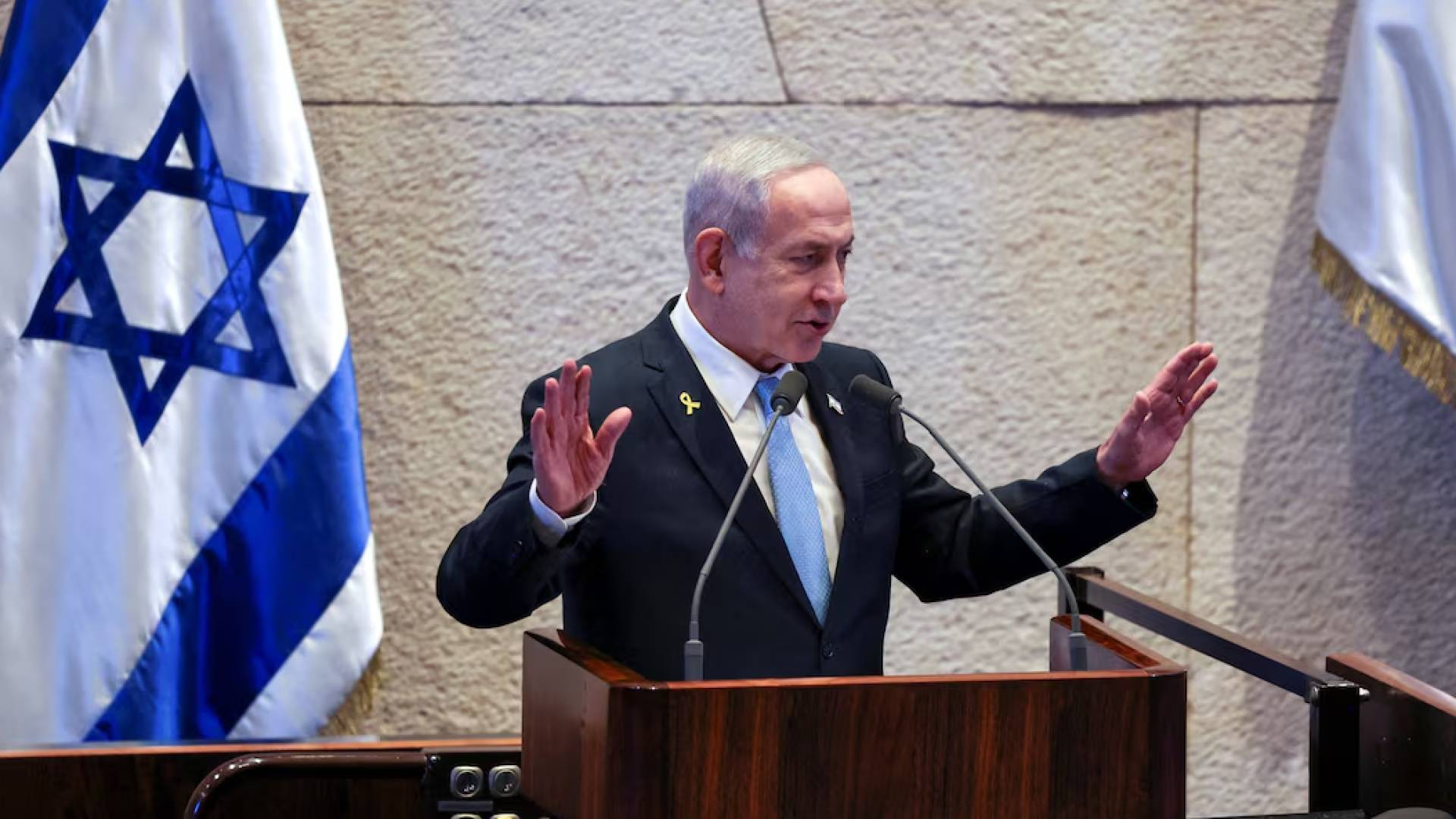
'Israeli' parliament approves dissolution bill, paving way for early election
Note: AI technology was used to generate this article’s audio.
-
'Israel’s' parliament has voted to dissolve itself, paving the way for possible early elections amid political tensions in Prime Minister Benjamin Netanyahu’s coalition.
'Israel’s' parliament, the Knesset, voted on Wednesday to dissolve itself, a decision that could bring national elections forward by several weeks and intensify political uncertainty around Prime Minister Benjamin Netanyahu’s government, which polls suggest is facing a difficult path to re-election.
Election timeline still unclear
A date for the next vote has not yet been set. 'Israel’s' parliamentary system requires elections every four years, though early polls are common. The most recent election was held in November 2022, with the next legally due by October 27 at the latest.
Following the dissolution vote, lawmakers must now agree on a timetable. Political observers in Israel expect a likely election window in early September, though it could still be scheduled closer to the October deadline depending on political negotiations.
What led to the dissolution vote?
The move follows a breakdown between Netanyahu’s coalition and an ultra-Orthodox faction that had previously been a key ally. The group announced this month that it no longer considers Netanyahu a political partner and would support early elections.
The faction’s decision stems from frustration over the government’s failure to advance legislation exempting its community from mandatory military service. Opposition parties, who have long pushed to unseat Netanyahu, also backed the dissolution effort.
Although a similar attempt failed last June, analysts say the latest vote could strengthen opposition momentum and restrict the government’s ability to pass controversial laws before elections.
Next procedural steps
The bill now heads to committee stage, where members will negotiate an election date before returning it for final approval. The dissolution process requires a final majority of 61 votes in the 120-seat Knesset. The timeline could move quickly or stretch over several weeks.
Polling outlook and political uncertainty
Recent polling indicates Netanyahu’s governing bloc is struggling to secure enough seats for a majority, following the political fallout from October 7, 2023 event.
However, analysts note that opposition parties may also struggle to form a stable governing coalition, raising the possibility of a caretaker government if no side succeeds in building a majority. 'Israel' has faced similar political deadlock in recent years, including a series of repeated elections before 2022.
Opposition contenders
Netanyahu’s main challenger is former prime minister Naftali Bennett, who has joined forces with opposition leader Yair Lapid under a new political alliance called “Together.” Polls show the bloc running close to Netanyahu’s Likud party.
Former military chief Gadi Eisenkot is also emerging as a significant contender, with all major candidates focusing their campaigns on national recovery, political stability, and economic repair after years of conflict and domestic division.
Other pressures on Netanyahu
Beyond the political turmoil, Netanyahu continues to face a long-running corruption trial. President Isaac Herzog is reportedly involved in efforts to explore a possible plea deal, which could potentially end Netanyahu’s political career, though no agreement has been reached.
His personal health has also drawn attention after recent treatment for prostate cancer and the implantation of a pacemaker in 2023.
Separate legislative dispute
In parallel, a Knesset committee failed to advance a controversial “West Bank and Gaza” antiquities bill to a plenary vote. The proposal, criticised by opponents as a step toward de facto annexation, is expected to return for further discussion in the coming days, though its future is now uncertain as the dissolution process advances.