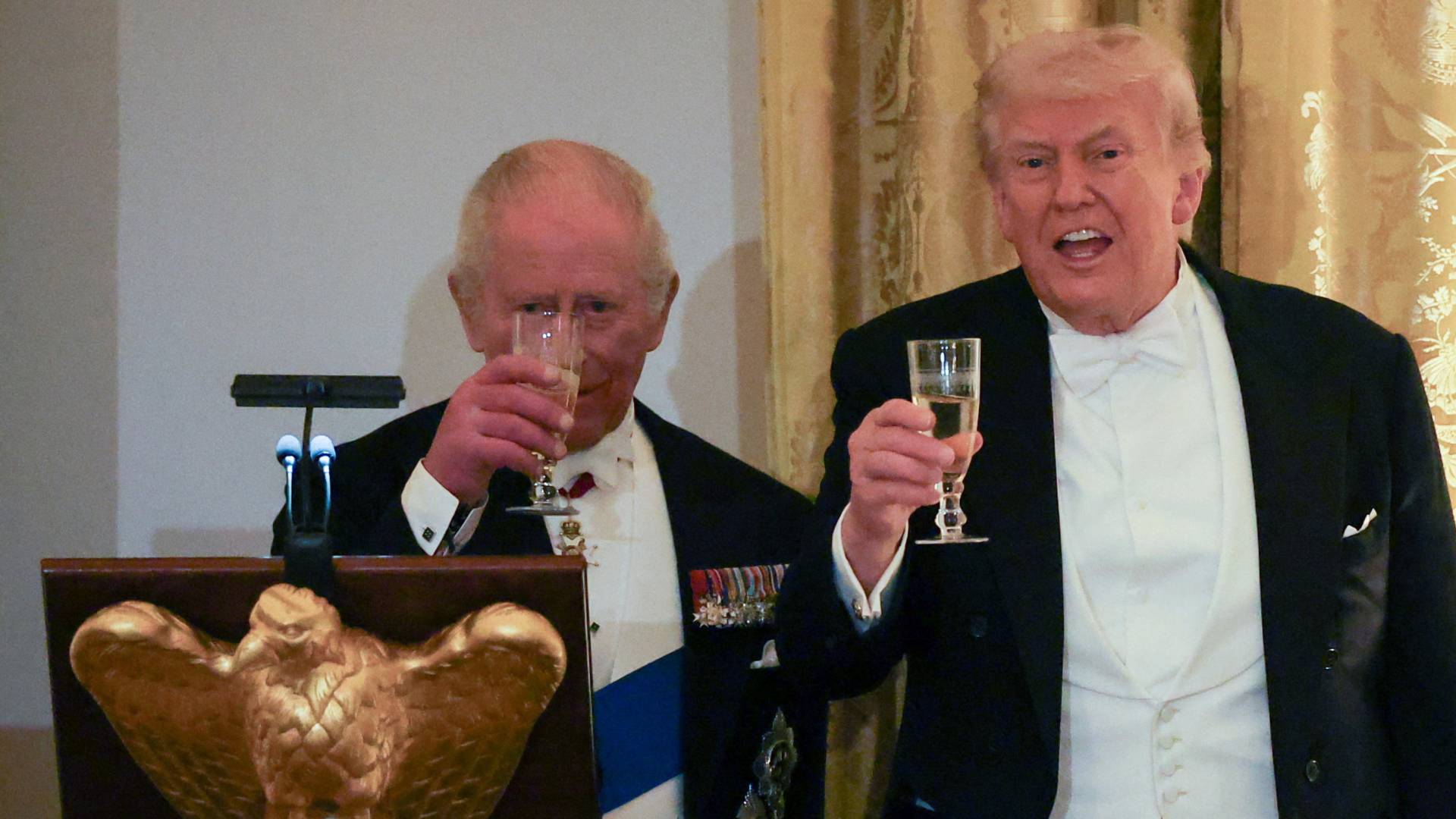
Trump lifts tariffs on UK whiskey to toast departing King Charles
Note: AI technology was used to generate this article’s audio.
- Trump says tariffs on UK whiskey and bourbon-related trade will be removed.
- Move comes during royal visit marking 250th anniversary of US independence.
US President Donald Trump announced on Thursday that he will lift tariffs on whiskey imports from the United Kingdom, framing the decision as a gesture of respect to King Charles during a high-profile royal visit to the United States.
The announcement came on Trump’s Truth Social platform on the final day of the state visit, which coincided with commemorations tied to the United States’ approaching 250th anniversary of independence from Britain.
Trump said the decision would ease restrictions affecting cooperation between Scotland and Kentucky on whiskey and bourbon production, highlighting long-standing transatlantic trade ties.
Read more: King Charles, Trump toast ties despite Iran tensions
“In honor of the King and Queen of the United Kingdom,” Trump wrote, adding that the royal couple had encouraged steps to strengthen commercial relations between the two countries.
He also described Charles as the “greatest king” and said the issue had been discussed for some time due to historical trade connections involving wooden barrels used in aging whiskey.
British Trade Secretary Peter Kyle welcomed the announcement, calling it “great news” for the Scotch whisky industry, which he said is worth nearly £1 billion in exports and supports thousands of jobs across the United Kingdom.
A Buckingham Palace spokesperson said King Charles expressed “sincere gratitude” for the decision, noting its potential positive impact on the British whisky sector.
The statement added that the King would “raise a dram” in appreciation of Trump’s hospitality at the conclusion of the visit.
The visit, officially centered on historic ties between the two countries, also came amid broader geopolitical tensions, including recent strain between the United States and several European allies over differing positions on the US-Israeli war against Iran.
Despite those tensions, both sides emphasized economic cooperation and shared historical ties during the four-day visit.