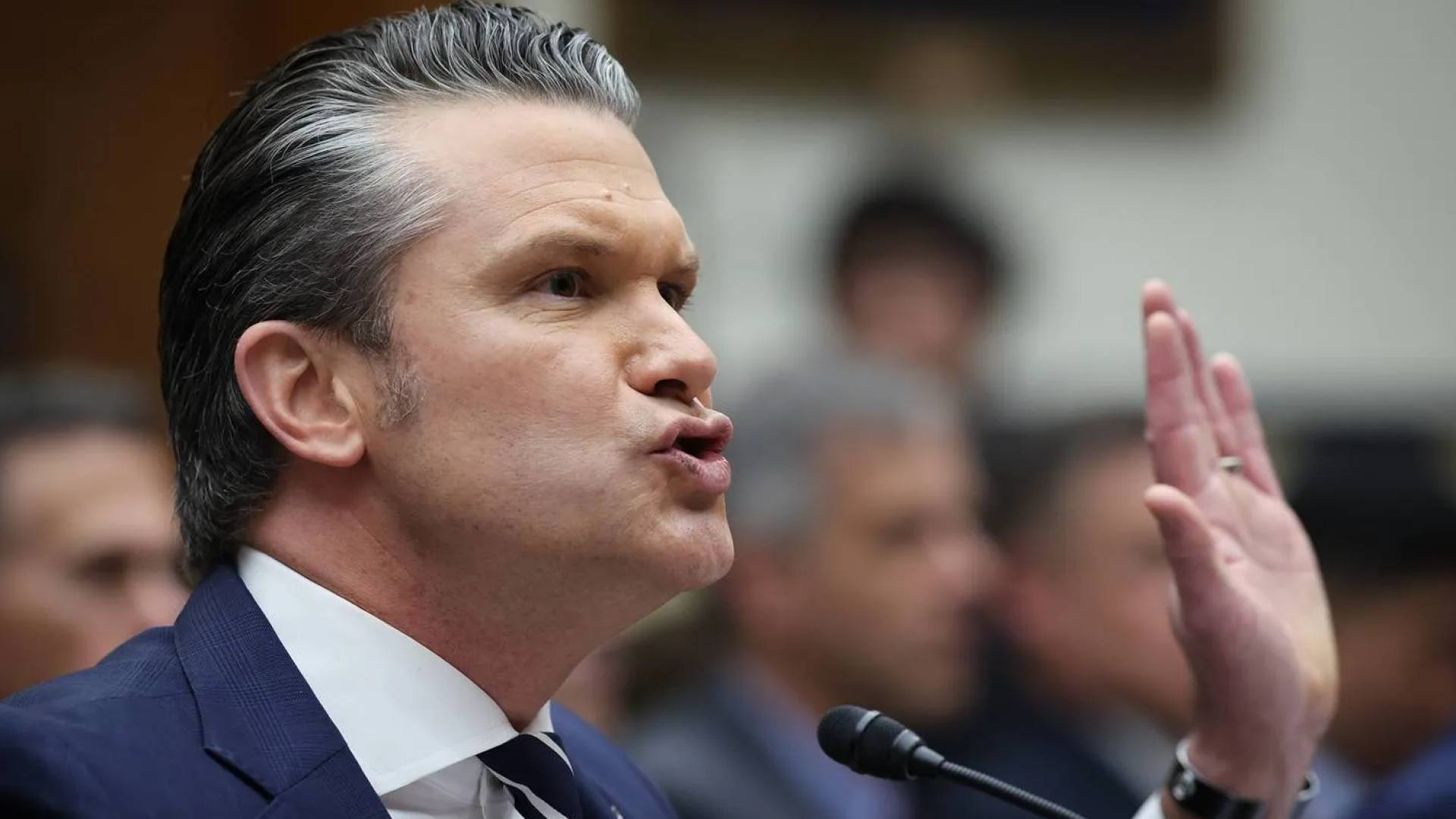
Hegseth faces congressional scrutiny over Iran war costs, Kuwait strike
Note: AI technology was used to generate this article’s audio.
- US Defense Secretary Pete Hegseth estimates Iran war cost at about 25 billion dollars.
- Lawmakers question strategy, civilian impact, and reported attack on US troops in Kuwait.
US Defense Secretary Pete Hegseth faced intense questioning in Congress on Wednesday during his first briefing on the ongoing war in Iran, as lawmakers challenged the administration’s strategy, costs, and military decisions.
The hearing, held before the House Armed Services Committee alongside Joint Chiefs Chairman General Dan Caine, marked one of the most detailed public examinations of the conflict since it began on February 28.
Read more: "Next stop: 140." Iran's Ghalibaf mocks Trump over oil price
Lawmakers from both parties have repeatedly criticized the administration for limiting classified briefings to Congress during the war, despite constitutional expectations that legislators be kept informed on major military operations.
War costs reach 25 billion dollars
Hegseth told lawmakers that the war has cost approximately 25 billion dollars so far, with most spending directed toward munitions. He defended the figure, saying it reflected the scale of operations needed in the conflict.
Read more: Vance acknowledges concerns over US readiness amid Iran war
Democratic Representative Adam Smith questioned the strategic direction of the war, asking how tactical gains would translate into long-term outcomes, particularly regarding Iran’s nuclear program and regional stability.
He also referenced the deaths of 13 US service members and civilian casualties in the broader Middle East conflict.
Sharp partisan exchanges
Tensions escalated when Democratic lawmakers accused Hegseth of misleading the public about the war’s origins and progress.
Representative John Garamendi said the administration had provided shifting justifications for military action and described the war as a “strategic catastrophe” that had contributed to global economic strain, including rising oil and fuel prices.
Garamendi said, “What did we gain?” while arguing that the conflict had become a geopolitical quagmire.
Hegseth rejected the characterization, saying, “Shame on you for calling this a quagmire after two months.”
Kuwait attack and troop safety concerns
Lawmakers also pressed Hegseth on an Iranian attack in the early stages of the conflict that killed six US soldiers in Kuwait.
Representative Patrick Ryan questioned whether surviving troops had reported inadequate protection and asked if the Defense Department was dismissing their accounts.
Hegseth responded that the Pentagon had implemented “maximum defensive measures,” without directly addressing the allegations.
The attack has prompted calls from Democratic lawmakers for a formal investigation, with some arguing that Congress was not properly informed about the incident.
Strait of Hormuz and broader risks
Lawmakers raised concerns about Iran’s potential response to US strikes, including the risk of closing the Strait of Hormuz, a critical global energy corridor.
Hegseth said the Pentagon had “evaluated all risks” but declined to detail recommendations made to President Donald Trump regarding the initial decision to strike Iran.
Tensions over maritime security in the Gulf have intensified as Iran’s posture toward shipping lanes remains a central point of confrontation with the United States.
Budget expansion under debate
The hearing also coincided with discussion of a proposed 42 percent increase in the US defense budget, raising it to 1.5 trillion dollars by 2027.
Lawmakers framed the proposal as part of a broader debate over the long-term costs of the war and its strategic objectives, as diplomatic talks between Washington and Tehran remain stalled despite a ceasefire in place for three weeks.