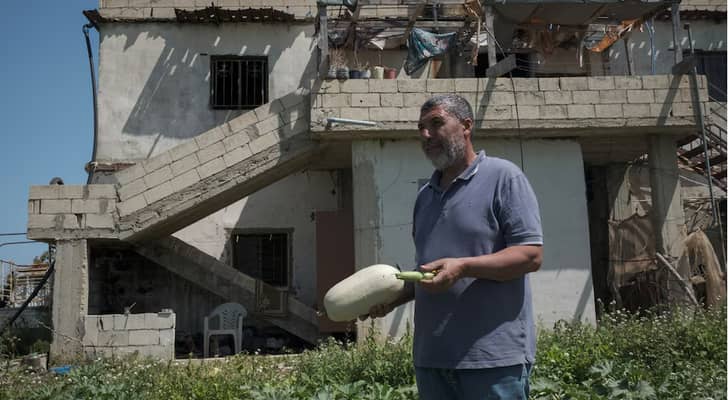
Farmer Abu Hassan Issa a Lebanese farmer in the village Ras El Ain, near Tyre, southern Lebanon, April 27, 2026. REUTERS

Over 1.2 million Lebanese resident fear facing acute food insecurity
Note: AI technology was used to generate this article’s audio.
- Families may struggle to afford basic food needs, IPC warns.
- Regional conflict pushes fuel and food prices higher.
- Agriculture minister says recovery will take years.
A hunger crisis is looming over Lebanon, with over one million people expected to face acute food insecurity in the coming months.
According to a new report released Wednesday by the Integrated Food Security Phase Classification (IPC), the combination of renewed warfare and economic collapse has pushed the nation’s food security to a critical breaking point.
The analysis projects that 1.24 million people will be unable to meet their basic nutritional needs between April and August 2026.
This marks a significant deterioration since the conflict escalated in early March, forcing families to reduce the quality of their food or resort to "harmful coping strategies" to survive.
Displacement drive shortages
The primary driver of the crisis is the two-month war between 'Israel' and Hezbollah that erupted on March 2. The fighting has displaced more than 1.2 million people, many of whom are now unemployed and entirely dependent on dwindling humanitarian donations.
"These results underscore the severity of the situation, where conflict intersects with economic pressures," said Nora Ourabah Haddad, the United Nations Food and Agriculture Organization (FAO) representative in Lebanon.
She warned that the intersection of displacement and rising food prices has placed the entire national food system at risk.
Agriculture sector in ruins
The IPC report highlights the devastating impact on Lebanon's "food basket" in the south. The agricultural sector, which provides both food and income for thousands of families, has been crippled by airstrikes and a ground invasion.
Key statistics from the Lebanese Ministry of Agriculture include:
76% of southern farmers have been forced to flee their lands.
22% of all agricultural land in the south has been damaged by white phosphorus or conventional shelling.
Rising fuel costs have made the remaining farming equipment and irrigation systems nearly impossible to operate.
A ‘Shaky’ peace offers little relief
While a fragile ceasefire took hold in mid-April, the IPC warns that the damage may take years to repair. Agriculture Minister Nizar Hani told reporters that the sector was still struggling to recover from the 2024 war when the current conflict began.
With humanitarian aid expected to decrease and food prices continuing to climb, aid agencies are calling for an immediate and permanent ceasefire to prevent the "Crisis" level of food insecurity from tipping into a full-scale famine.