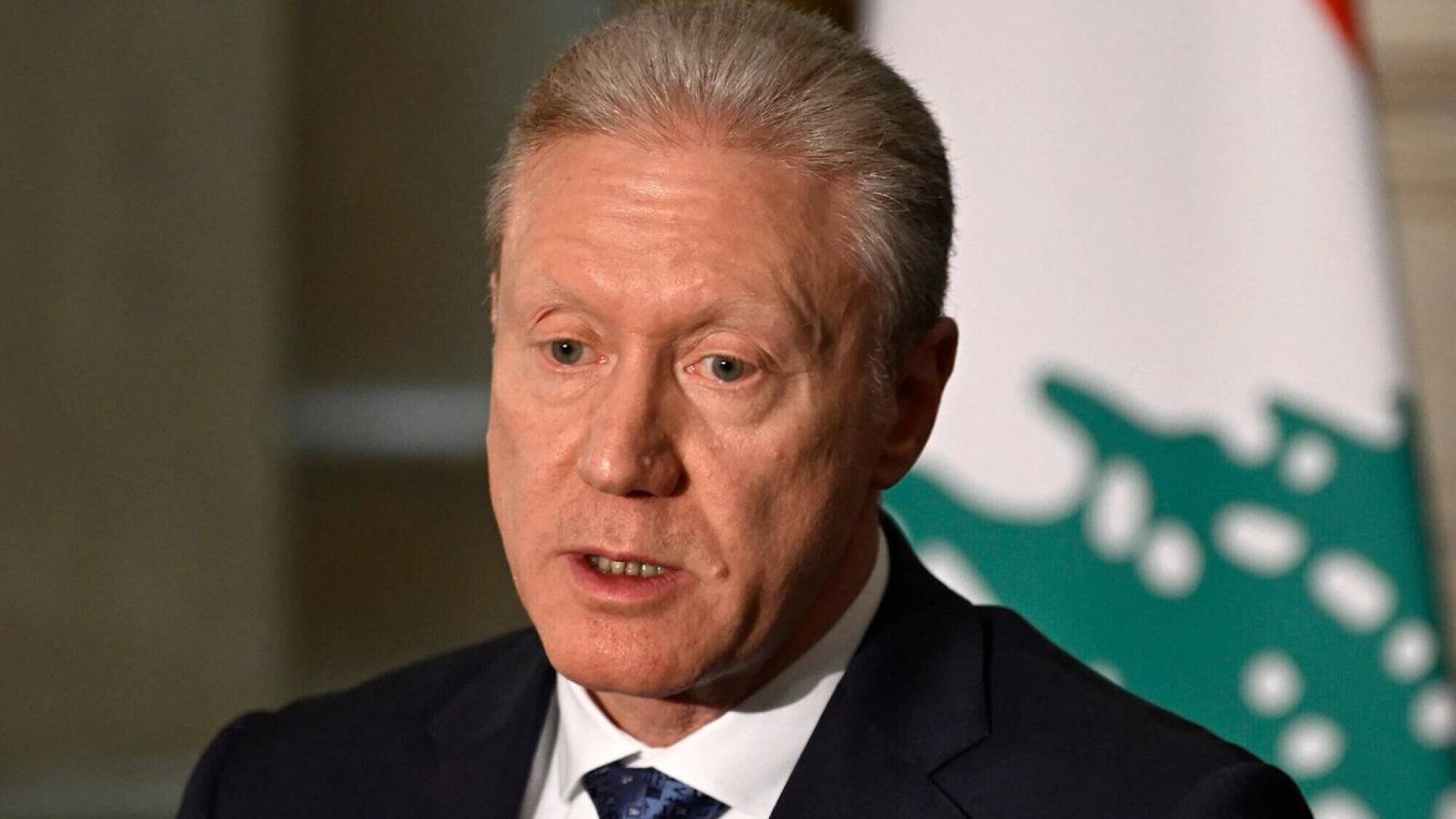
Lebanon FM says no ‘shame’ in negotiating with 'Israel'
Note: AI technology was used to generate this article’s audio.
- Foreign minister says negotiations aim to end war and reclaim territory.
- Separates Lebanon’s diplomatic path from Iran-linked regional agenda.
Lebanon’s Foreign Minister Youssef Raggi has said there is “no shame” in negotiating with ‘Israel’ if the objective is to end the war and recover occupied territory, defending Beirut’s diplomatic approach amid regional tensions.
Read more: Lebanon’s president says ceasefire extension talks are underway
In an interview with Asharq Al-Awsat, Raggi stressed that talks should not be viewed as surrender, but rather as a tool to safeguard national interests.
“Not a position of weakness”
Raggi rejected portrayals of Lebanon as diplomatically weak, arguing that such narratives are misleading.
“It is a grave mistake to portray Lebanon as being in a position of absolute weakness, just as it is equally wrong to portray it as being in a position of surrender,” he said.
Read more: Trump says 'Israel', Lebanon agree to extend ceasefire by three weeks
He also insisted that Lebanon is “not subordinate to anyone” and cannot be treated as a proxy for any regional bloc.
Sharp criticism of Hezbollah
The foreign minister also criticized Hezbollah, accusing the group of making political and military decisions that do not reflect Lebanon’s national interest or the needs of southern communities.
He said the group has “gambled with the fate of these villages and their residents,” in pursuit of broader regional agendas.
Separating from Iran track
Raggi drew a clear distinction between Lebanon’s diplomatic approach and wider regional negotiations involving Iran, saying the two tracks are no longer connected.
“The Lebanese track is now separate from the Iranian track,” he said, adding that Lebanon’s interests are “no longer hostage” to developments in Iranian talks.
Shifting diplomatic posture
The remarks signal a notable shift in Lebanon’s public messaging as regional tensions continue, with Beirut increasingly framing negotiations as pragmatic state policy rather than political concession.