‘Israeli’ security forces and first responders inspect the site of an Iranian strike that hit Petah Tikva. (April 2, 2026)


Iran vows “crushing” attacks as strikes hit regional infrastructure
Note: AI technology was used to generate this article’s audio.
Iran and its allies traded fire with ‘Israel’ and the United States, as Washington-linked assets across the Middle East were targeted alongside civilian infrastructure -- with the month-long war on Friday showing little sign of easing.
Strikes have increasingly targeted economic and industrial sites, raising fears of wider disruption to global energy supplies and deepening the conflict's impact beyond the battlefield.
Iran said its latest wave of attacks had struck targets in the United Arab Emirates, Bahrain and ‘Israel’ in retaliation for earlier US-‘Israeli’ strikes on its industrial facilities.
They included "American steel industries in Abu Dhabi, American aluminium industries in Bahrain, and the Rafael arms factories of the Zionist regime", it said.
‘Israel's’ military warned Friday that its air defences were operating to down missiles fired from Iran, although there were no immediate reports of casualties or damage.
Fresh explosions had earlier been reported in the Tehran area, with Iranian state television reporting US-‘Israeli’ strikes hit a bridge in the northern town of Karaj twice -- the first causing civilian casualties and the second striking as emergency teams responded.
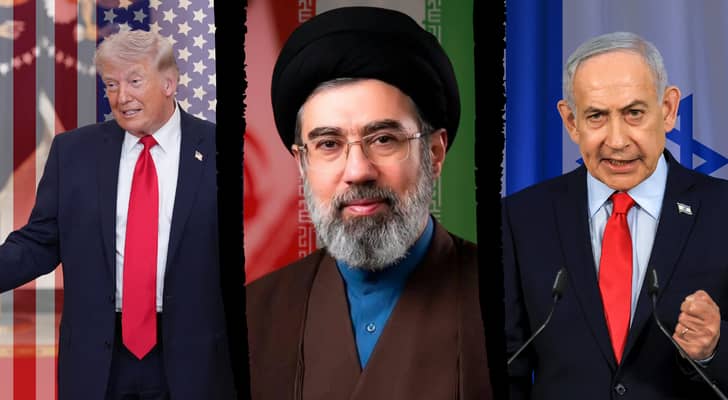
US President Donald Trump -- who on Wednesday threatened to bomb the Islamic republic "back to the Stone Ages" -- maintained his harsh rhetoric as he posted on social media that the bridge had been sent "tumbling down" and promising "much more to follow".
The country's two largest steel plants have also been forced offline by repeated US and ‘Israeli’ strikes, companies said.
Meanwhile, the Yemen's Houthis said they had launched a fourth attack on ‘Israel’, firing a "barrage of ballistic missiles" at targets in the Tel Aviv area.
Strait tensions
The conflict has also intensified pressure on global shipping, with the Strait of Hormuz -- a conduit for one-fifth of the world's oil -- effectively closed by Iran.
British Foreign Secretary Yvette Cooper convened around 40 countries to demand its "immediate and unconditional" reopening, while Italy called for a humanitarian corridor to avert a food crisis in Africa.
Tehran said it was drafting a post-war framework with Oman to oversee maritime traffic, though talks have yet to begin.
The head of the Gulf Cooperation Council, Jasem Mohamed AlBudaiwi, meanwhile called for UN backing to protect shipping through the strait, warning that Iran had blocked commercial vessels and imposed conditions on passage.
Bahrain has proposed a draft UN Security Council resolution that would authorise the use of force to ensure free transit, though the US-backed measure has divided members ahead of a vote.
Against that backdrop, Trump has warned that further strikes could target Iran's energy infrastructure if no deal is reached.
He said Washington had "our eyes on key targets", including power plants, while also suggesting Tehran's new leadership could prove "more reasonable" in potential talks.
Iran has dismissed US overtures as "maximalist and irrational", saying messages had been passed through intermediaries but no direct negotiations were underway.