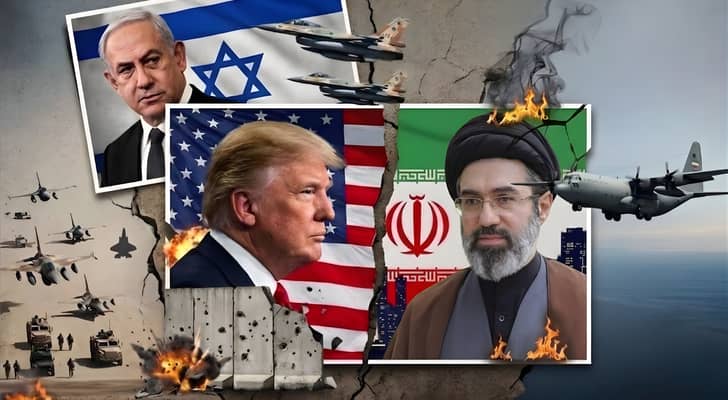
'Israeli' Ambassador defends nuclear monopoly as a 'stabilizing force' in Middle East
Note: AI technology was used to generate this article’s audio.
- ‘Israeli’ Ambassador Danny Danon claims nuclear capability is a regional stabilizer.
- 'Israel' remains outside the NPT, avoiding inspections while neighboring states face scrutiny.
In a tense exchange at the United Nations, ‘Israeli’ Ambassador Danny Danon defended the country’s exclusive nuclear stance, calling it essential for Middle East stability. The remarks came during a press briefing when journalists questioned the perceived double standard on atomic weapon rights.
Reporter Challenges Regional Parity
"Why Israel has the right to acquire nuclear weapons, but no other Middle Eastern country has that same right?" asked one reporter, highlighting long-standing diplomatic friction. 'Israel' remains the only regional nation outside the Treaty on the Non-Proliferation of Nuclear Weapons (NPT), an international framework aimed at curbing the spread of nuclear arms.
Read more: Russia summons 'Israeli' ambassador after strike injures RT journalists
'Stability vs. Chaos'
Danon avoided directly confirming Israel’s nuclear arsenal, citing the country’s policy of "Amimut", or ambiguity. He said, "One should ask himself about every nation: 'Who is bringing stabilization to the area and who is bringing chaos?'" He added, "Israel is a stabilizing force in the region. We want peace." When pressed again on specifics, Danon ended the briefing abruptly, saying, "I did [answer]," and left the podium.
Context: Long-standing Policy of Ambiguity
Since the 1960s, Israel has neither confirmed nor denied its nuclear status. Critics argue this nuclear monopoly undermines the prospect of a Nuclear-Weapon-Free Zone (NWFZ) in the region. Meanwhile, nations like Iran face strict international scrutiny and sanctions as NPT signatories, whereas Israel maintains its capabilities without mandatory inspections by the International Atomic Energy Agency (IAEA).
Read more: About 47,000 Americans have returned home since the Middle East conflict began
The confrontation underscores the enduring debate over nuclear parity and the diplomatic tensions surrounding Israel’s unique military position in the Middle East.