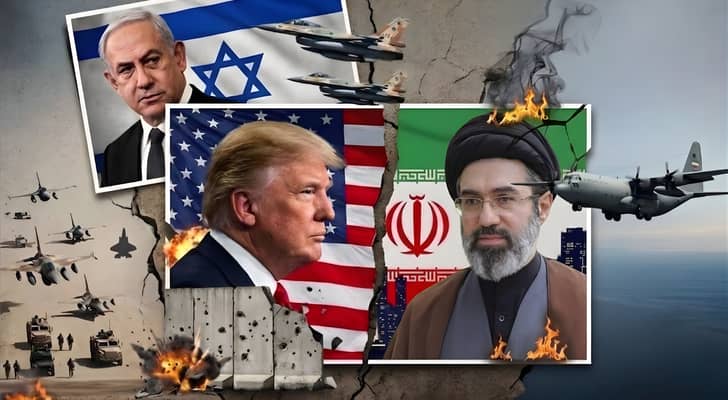
Iran considers US peace proposal but rules out talks
Note: AI technology was used to generate this article’s audio.
- Iran reviewing US plan to halt conflict but rejects formal negotiations.
- 'Israel' continues airstrikes on Tehran; Iran targets 'Israel' and US bases.
Iran said on Wednesday it is examining a US proposal to end the ongoing war in the Middle East but does not intend to hold direct talks with Washington.
Iranian Foreign Minister Abbas Araghchi told state television that Tehran might consider negotiations if its demands are met, but emphasized that exchanging messages through intermediaries “does not mean holding talks with the United States.” He added, “They proposed ideas in messages sent to our senior authorities, which, if necessary, will announce their stance.”
Read more: Trump postpones Iran power plant strikes after 'very good' peace talks
Proposal details
Three 'Israeli' government sources told Reuters that the US plan contains 15 points, including eliminating Iran’s stockpiles of highly enriched uranium, halting enrichment activities, curbing ballistic missile programs, and ending support for regional proxy groups. The White House declined to disclose details but warned of intensified strikes if Iran rejects the plan.
Read more: Trump announces “very good” Iran talks denied by Tehran
White House spokesperson Caroline Leavitt said, “If Iran does not accept the reality, and does not recognize its military defeat, the president will ensure a strike stronger than any before.”
'Israel' has expressed doubts that Iran will comply, with officials warning against US concessions and emphasizing that any agreement should preserve Israel’s right to preemptive action.
Market response and troop movements
Global stock markets recovered some losses, and oil prices dropped after reports of the US proposal. Investors hope the plan could ease a conflict that has disrupted energy supplies and fueled inflation.
The Pentagon plans to deploy thousands of troops to the Gulf to expand President Trump’s options for a potential ground operation. Two Marine units are already en route, with the first expected to arrive aboard an amphibious assault ship by the end of March.
Escalation warnings
Iranian media cited an unnamed military source warning that Tehran could open a new front in the Bab el-Mandeb Strait if its territory or islands are attacked, calling it a “real threat” to the strategic waterway linking the Red Sea.
Iranian Parliament Speaker Mohammad Bagher Ghalibaf also said Iran could strike a neighboring country if it assists “enemies” in occupying Iranian islands.
Since the US-led campaign dubbed “Operation Wrath,” Iran has attacked nations hosting American bases, targeted Gulf energy infrastructure, and effectively closed the Strait of Hormuz, a key global oil transit route.
United Nations Secretary-General Antonio Guterres warned of the risk of a wider war, urging an end to escalation and a return to diplomacy.
Airstrikes on Iran continued, while Tehran launched drone and missile attacks on Israel and US allies. 'Israeli' forces carried out multiple waves of strikes on Iranian naval shipyards and other targets. Iranian rescue teams were reported searching rubble in Tehran after residential areas were hit. The Iranian Revolutionary Guard also claimed new attacks on 'Israel' and US bases in Kuwait, Jordan, and Bahrain.