A lesson in predictive history: Professor Jiang on why the U.S. will likely lose to Iran
Note: AI technology was used to generate this article’s audio.
- Escalation Control Beats Dominance: Iran’s selective, flexible strategy outmaneuvers the US’s blunt escalation ladder.
- US Inverted Pyramid Weakness: Overreliance on air power makes prolonged ground conflict costly and unsustainable.
- Game Theory in Action: Regional powers’ conflicting objectives trap the US into disadvantageous positions.
- Strategic Flexibility Wins: A smaller, adaptable force can dictate the pace and terms of conflict.
In a provocative lecture delivered Tuesday to high school students at Moonshot Academy in Beijing, Chinese-Canadian educator and YouTube creator Professor Jiang Xueqin, known globally for his “Predictive History” channel, offered a detailed game-theory-based analysis of the ongoing US-Iran conflict.
His central thesis: Iran’s strategic flexibility and focus on escalation control may be giving it an upper hand over the United States’ pursuit of escalation dominance.
Escalation Control vs. Escalation Dominance
Opening the session, Jiang explained a core principle of modern military strategy: the ability to control escalation is more decisive than merely dominating an opponent. Using a classroom analogy, he likened conflict to a school cafeteria fight, where strategic calibration, deciding when and how to respond, can outweigh sheer force.
“Calibration is ultimately about strategic flexibility,” Jiang said. “The person with the most options and a flexible strategy will usually win the fight.”
The School Bully Analogy
To clarify his point, Jiang introduced a thought experiment featuring a school bully and a new student. The bully wields power through intimidation and gradually escalates conflict, while the new student, exercising patience and strategic foresight, selects the timing and intensity of each move.
Over time, the bully’s rigidity leads to overreach, while the flexible newcomer gains the advantage.
Jiang used this analogy to explain the escalation ladder: victory does not necessarily go to the strongest actor, but to the one who applies strategy selectively and with precision.
US vs. Iran: Diverging Escalation Ladders
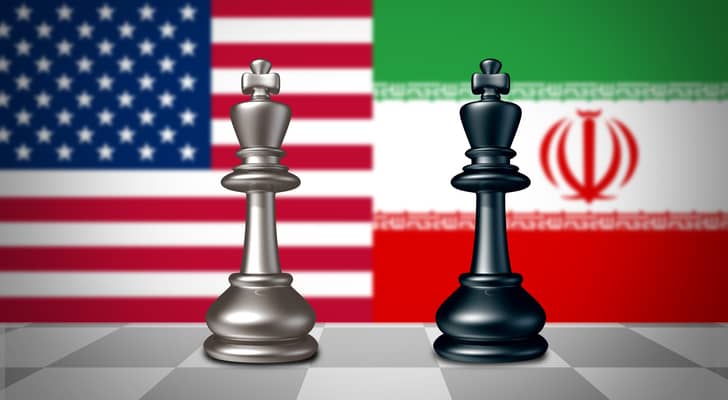
Jiang analyzed the current US-Iran dynamic through this framework:
- United States: Relies heavily on air power and a linear escalation ladder that moves from decapitation strikes to economic blockades, infrastructure attacks, and potentially advanced weapons. Jiang criticized this approach as reactive and inflexible, with unclear objectives.
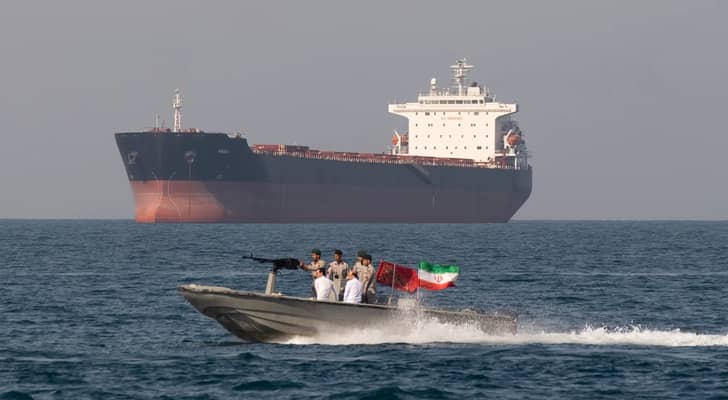
- Iran: Employs a selective, calibrated strategy, targeting US radar systems, air defenses, and regional chokepoints like the Strait of Hormuz. This approach allows Iran to manipulate regional allies and maintain initiative, exemplifying effective escalation control despite technological inferiority.
“Iran’s advantage lies in flexibility,” Jiang noted. “Control of escalation timing allows a smaller or less advanced force to influence outcomes disproportionately.”
The Cost Pyramid and Ground Troops
Jiang also critiqued the American military structure, contrasting the theoretical “cost pyramid”, soldiers at the base, followed by armor, naval units, and air power at the top, with what he calls the “US inverted pyramid,” where air power dominates and soldiers are minimized.
“Wars are usually wars of attrition,” he said. “If you want to win, your cheapest and most flexible resource, soldiers, should form the base of your military strategy.”
Based on this analysis, Jiang predicted the US will eventually deploy ground troops to Iran despite domestic resistance and the high financial and political costs of such a campaign.
Game Theory and Strategic Players
Applying game theory, Jiang broke down the objectives of key actors:
- United States: Seeks to neutralize Iran to maintain control over oil and global influence.
- Iran: Aims to control the Strait of Hormuz and reduce US influence in the Middle East.
- 'Israel': Works to counter both Iran and US influence to consolidate regional power.
Jiang emphasized that these divergent goals create a strategic environment where each state pressures the others into disadvantageous positions, often prolonging conflict for the US in particular.
Strategic Takeaways
The lecture highlighted factors contributing to Iran’s potential success: focus, clarity of purpose, and societal mobilization. Jiang stressed that modern conflicts extend beyond the battlefield, encompassing political, economic, and narrative dimensions.
“Wars are not just about weaponry,” he reminded students. “They are about controlling the narrative, political relationships, and resources in a way that is strategically advantageous.”
Predictions
Jiang concluded with two key predictions based on his game-theory model:
- US Ground Troops: The United States will send ground forces into Iran as part of a prolonged strategy to achieve its objectives.
- Nuclear Weapons: Neither the US nor 'Israel' is likely to employ nuclear arms, as escalation control and political constraints remain decisive factors.
By framing the US-Iran conflict in terms of strategic calibration and multidimensional warfare, Jiang offered students a lens that prioritizes flexibility and timing over brute force, suggesting that, in modern conflicts, the most sophisticated military might not always prevail.