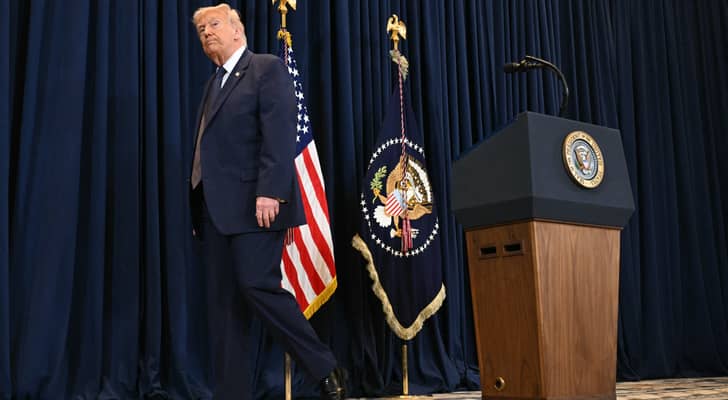
Pete Hegseth speaks during a press conference at CENTCOM headquarters at MacDill Air Force Base in Tampa, Florida. (March 5, 2026)


Pentagon chief says US intensifying strikes on Iran
Note: AI technology was used to generate this article’s audio.
- Hegseth announced that Tuesday would mark the "most intense day of strikes" yet, involving a record number of bombers and fighters, while saying that Trump alone "controls the throttle" on the war’s timeline.
- General Caine confirmed the systematic destruction of Iran’s navy and mine-laying assets to keep oil routes open, as Hegseth noted that Iranian retaliatory fire had reached its "lowest volume" in 24 hours, suggesting a significant depletion of Tehran's missile stockpiles.
US attacks on Iran will hit a new intensity Tuesday and the war will continue as long as President Donald Trump decides, Pentagon chief Pete Hegseth said.
"Today will be yet again, our most intense day of strikes inside Iran -- the most fighters, the most bombers," Hegseth told a news conference at the Pentagon more than 10 days into the US-‘Israeli’ war against the Islamic republic.
As for a timeline for the war, Trump "gets to control the throttle. He's the one deciding," Hegseth said.
"It's not for me to posit whether it's the beginning, the middle or the end," the defense secretary said.
Trump had said the previous day that the war could end "very soon," but remained vague.
Among the goals is destruction of Iran's navy, which has been targeted with "artillery, fighters, bombers and sea-launched missiles," General Dan Caine, the top US military officer, said alongside Hegseth on Tuesday.
Iran has vowed to block all oil exports via the Gulf while the war lasts, while Trump has threatened "death, fire, and fury" if Tehran interferes with crude exports.
Caine said US forces continue "to hunt and strike mine-laying vessels and mine storage facilities" -- weapons Iran could use to block maritime traffic.
Hegseth meanwhile accused Iran of "moving rocket launchers into civilian neighborhoods, near schools, near hospitals to try to prevent our ability to strike," saying "that's how they operate."
He did not directly address a strike early in the conflict that hit an elementary school in the southern city of Minab, which Iran said killed more than 150 people, but said that "no nation takes more precautions to ensure there's never targeting of civilians than the United States of America."
Trump has said the incident is being investigated, while suggesting Monday that Iran may have fired a Tomahawk missile at the school itself.
Iran does not possess Tomahawks -- a US weapon used extensively by US forces, including in the current conflict.
Tehran has responded to the war by launching waves of missiles and drones at countries in the region that host US forces, but Hegseth said Tuesday that the volume of fire is lessening.
"The last 24 hours have seen Iran fire the lowest number of missiles they've been capable of firing yet," he said.