Rafah Border Crossing

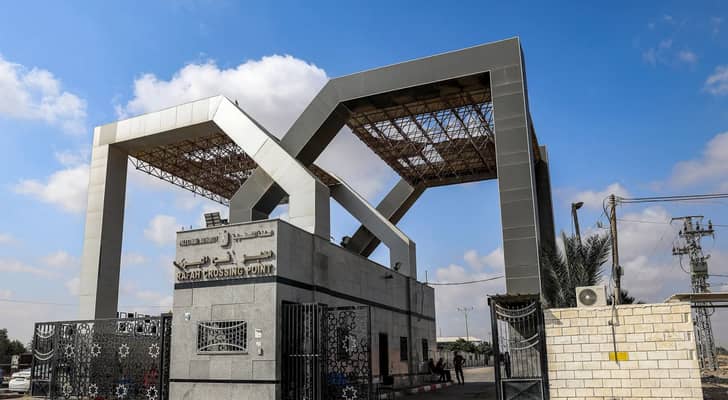
Tensions rise as US urges 'Israel' to open Rafah Crossing amid last captive dispute
Note: AI technology was used to generate this article’s audio.
- 'Israeli' officials reportedly angry at US pressure to open Rafah Crossing this week.
- Pressure comes despite Hamas not returning remains of last captive, Ran Gvili.
- 'Israeli' official criticizes US envoy Steve Witkoff, accusing him of advancing "Qatari interests" as they called it, and risking conflict with Turkey.
'Israeli' officials are expressing anger over US pressure to open the Rafah Border Crossing between Gaza and Egypt this week, even if Hamas does not return the remains of the last 'Israeli' captive still held in Gaza, according to 'Israeli' media reports.
Read more: Ali Shaath says Rafah crossing will reopen next week
The dispute follows a meeting Saturday between Prime Minister Benjamin Netanyahu and senior US figures Steve Witkoff and Jared Kushner, held as part of discussions on the second phase of the Gaza ceasefire agreement.
According to the Ynet news site, an unnamed 'Israeli' official sharply criticized Witkoff for pressing 'Israel' to move forward with opening the crossing despite uncertainty over the return of Ran Gvili.
“We hope Ran Gvili is returned this week and we can go forward,” the official was quoted as saying. “Witkoff pushed for placing our big rival Turkey on the border. The clock is ticking backwards to the confrontation with Turkey, which will be a tangible danger to our security.”
The official also accused Witkoff of advancing regional interests hostile to 'Israel', claiming he had “become a lobbyist for Qatari interests.”
Read more: Hamas gives update on last ‘Israeli’ captive in Gaza
Reports Signal Movement on Rafah Opening
Despite 'Israeli' resistance, regional and international signals suggest progress toward reopening the Rafah Crossing. A Palestinian source on the Gaza Strip management committee told Sky News Arabia that the crossing would soon open in both directions, with European observers present and 'Israeli'oversight conducted remotely via security cameras.
According to the source, there would be no additional 'Israeli' checkpoints for Gazans exiting the Strip, while an international 'Israeli' checkpoint would be established for those returning. The Rafah Crossing has long served as Gaza’s primary gateway to Egypt and the outside world.
Political Constraints on Netanyahu
An opinion columnist writing in Haaretz said that a Palestinian technocratic committee associated with what was described as the Trump administration’s “board of peace” would require tangible achievements to gain public trust in Gaza. Chief among them, the columnist argued, is the reopening of the Rafah Crossing.
The writer noted that while progress appears to be underway, Netanyahu faces significant political constraints. Opening Rafah could be interpreted by Hamas, the 'Israeli' public, and Netanyahu’s far-right coalition partners, including National Security Minister Itamar Ben-Gvir and Finance Minister Bezalel Smotrich, as a symbolic “return to routine” after nearly two years of war.
At the same time, the columnist argued that Netanyahu cannot afford to reject US demands outright, particularly after announcements regarding the crossing were made in Washington’s presence and under its auspices.
US Visit Seen as Pressure Campaign
The Haaretz opinion piece characterized the visit by Kushner and Witkoff, who arrived Saturday evening after talks in Abu Dhabi related to Russia-Ukraine negotiations, as another effort to constrain Netanyahu’s maneuvering room.
The visit was described as a “Bibi-sitting” session aimed at preventing the prime minister from delaying or avoiding commitments tied to the ceasefire’s next phase.
Limited Scope of Rafah Reopening Expected
While the Rafah Crossing carries significant symbolic and humanitarian weight, analysts caution that its reopening would likely be limited in scope. Although infrastructure has reportedly been prepared for aid and goods, initial operations are expected to focus only on the movement of people.
Restrictions would likely remain strict, with controlling departures from Gaza and 'Israel strictly controlling entry into the enclave.
As negotiations continue, the fate of the Rafah Crossing and the unresolved issue of the final captive remain a central point of tension between Jerusalem and Washington.