Gaza turns to hydroponics to survive food crisis under siege
Note: AI technology was used to generate this article’s audio.
- Hydroponic farming emerges in Gaza as a survival strategy amid Israeli genocide, water scarcity, and food insecurity.
- Local engineers and farmers adapt rooftops and small spaces to grow crops efficiently with minimal resources.
Amid shrinking land, water scarcity, and closed crossings, traditional agriculture in Gaza has become increasingly unsustainable. The ongoing 'Israeli' genocide has destroyed large swathes of farmland, deepening the region’s food insecurity.
Hydroponics emerges as a survival strategy
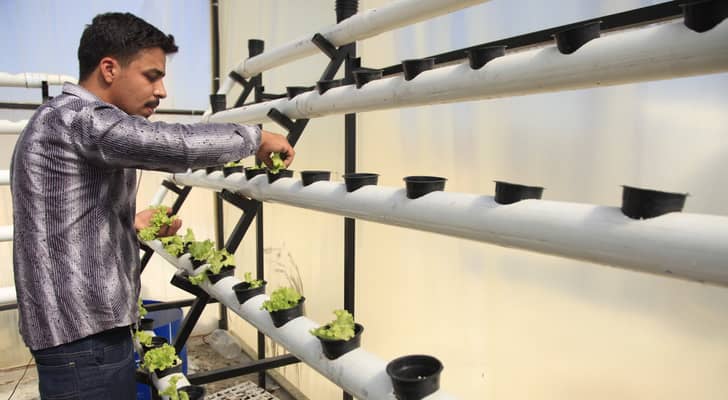
Hydroponic farming, growing plants without soil using water enriched with organic and mineral nutrients, has emerged as a practical solution. The method reduces water consumption and increases crop yields in limited spaces, making it suitable for Gaza’s constrained environment.
Read more: OCHA warns Gaza faces massive shelter crisis amid winter
Local agricultural engineers and farmers are experimenting with hydroponics on rooftops and small plots near homes. Osama Amer, an agricultural engineer, uses floating beds in a 90-square-meter rooftop greenhouse to grow strawberries, tomatoes, and hot peppers. He told Quds Press that the technique could significantly increase productivity while using far less water than conventional farming.
Challenges to implementation
Despite its promise, hydroponics faces major challenges. Restrictions on importing fertilizers and seeds, high prices, and frequent electricity cuts threaten continuity. These obstacles are compounded by the destruction of over 90% of Gaza’s water networks and the presence of more than 15 million tons of rubble across the territory.
Humanitarian impact of ongoing war
The 'Israeli' genocide in Gaza, ongoing since October 7, 2023, with US backing, has resulted in mass killings, starvation, displacement, and destruction. More than 242,000 Palestinians have been killed or injured, mostly women and children, over 11,000 are missing, and hundreds of thousands are displaced. Most of Gaza’s cities and regions have been severely damaged or erased.
Read more: US ambassador to ‘Israel’ signals Gaza Displacement plan under consideration
Hydroponic farming now represents one of the few avenues for Palestinians to secure food and maintain a degree of self-sufficiency under siege conditions.