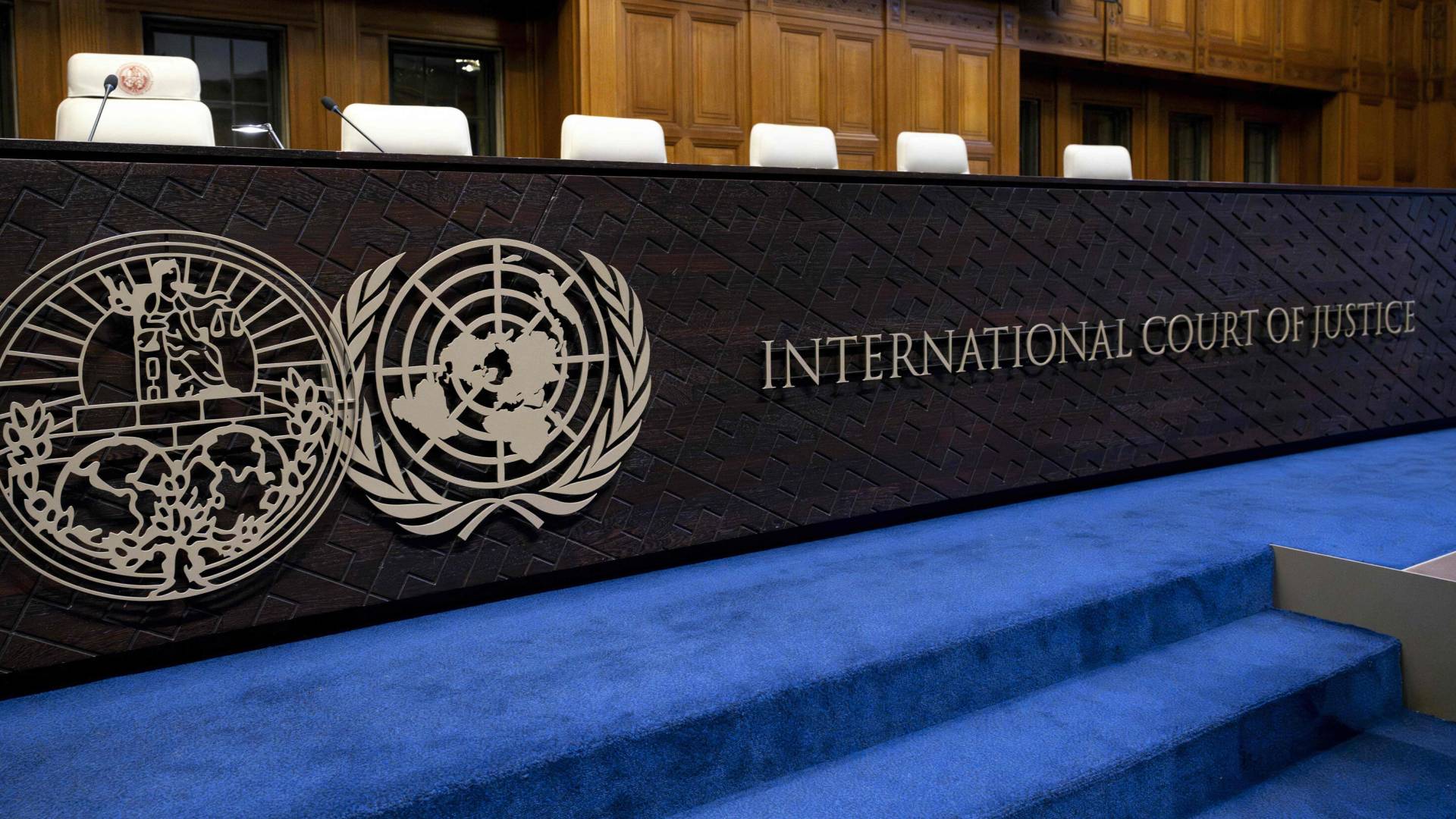
The International Court of Justice (ICJ).

Belgium joins genocide case against ‘Israel’ at ICJ
Note: AI technology was used to generate this article’s audio.
- Belgium Joins ICJ Case: Belgium has formally intervened in South Africa’s genocide case against ‘Israel’, joining several other nations in providing observations on the interpretation of the 1948 Genocide Convention.
- Growing International Pressure: The move follows Belgium’s 2025 recognition of Palestinian statehood and comes amid ICJ reports of over 70,000 Palestinian deaths and previous court rulings declaring ‘Israel's’ occupation unlawful.
Belgium has formally joined South Africa’s case at the International Court of Justice (ICJ), accusing ‘Israel’ of committing genocide in the Gaza Strip during its ongoing assault.
The declaration of intervention was filed by Brussels on December 23, 2025, under Article 63 of the ICJ Statute, which permits states to participate in proceedings interpreting multilateral treaties such as the 1948 UN Convention on the Prevention and Punishment of the Crime of Genocide.
South Africa initiated the case in December 2023, asserting that ‘Israel’s’ actions in Gaza, including widespread bombardment and restrictions on humanitarian aid, constitute violations of the Genocide Convention.
‘Israel’s’ assault has led to over 70,942 Palestinian deaths and 171,195 injuries in Gaza, as reported by the Palestinian Ministry of Health, figures deemed reliable by the United Nations.
This intervention allows Belgium to submit observations on the interpretation of the Genocide Convention without altering the case’s core parties.
Notably, Belgium recognized the State of Palestine in September 2025, joining nearly 80 percent of UN member states in doing so.
Several other nations have previously intervened in the case, including Brazil, Colombia, Ireland, Mexico, Spain, and Turkey, broadening the international support for South Africa.
Some Western allies of ‘Israel’, such as the United States, rejected the allegations and continued military support to ‘Israel’.
The ICJ, based in The Hague, serves as the principal judicial organ of the United Nations for resolving disputes between states.
The court has already issued provisional measures in January, March, and May 2024, directing ‘Israel’ to take all necessary steps to prevent genocidal acts, facilitate humanitarian aid, and halt operations that could exacerbate the crisis in Gaza.
These orders are legally binding but lack direct enforcement mechanisms, leading to ongoing debates about compliance.
In July 2024, the ICJ further ruled that Israel’s occupation of Palestinian territories is unlawful and constitutes de facto annexation.
‘Israel’ has consistently denied the genocide accusations, describing the case as baseless and politically motivated, while criticizing the ICJ proceedings.
‘Israeli’ officials claim that their actions are defensive measures against Hamas and comply with international humanitarian law.