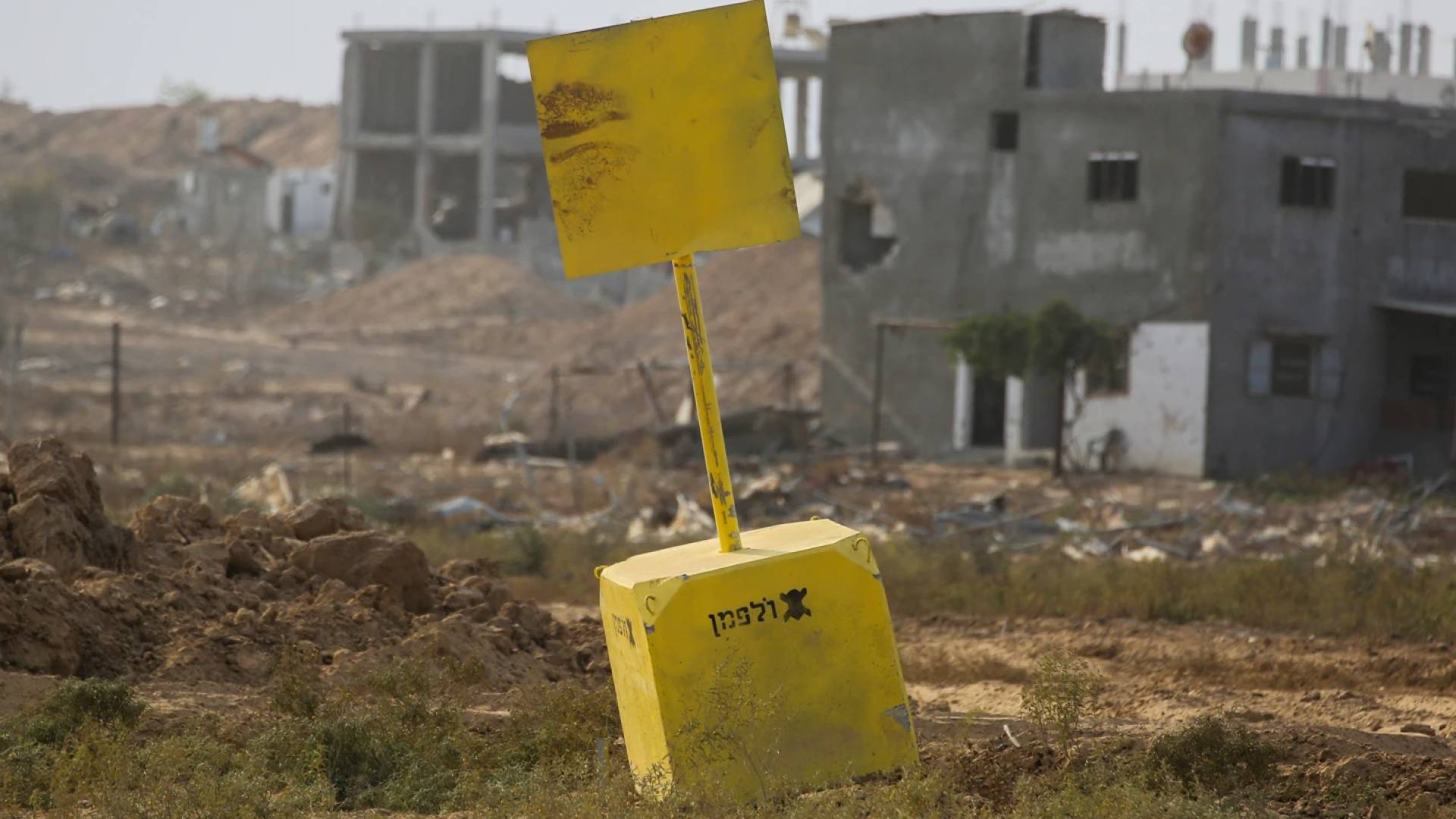
Gazans under 'Israeli' fire fear new displacement east of the "Yellow Line"
Note: AI technology was used to generate this article’s audio.
- Gaza residents trapped: Families in eastern Khan Yunis live in tents or damaged homes under constant 'Israeli' shelling, unable to relocate due to overcrowding in safer areas.
- Fear of forced displacement: Palestinians resist leaving their land despite daily demolitions and escalating attacks, warning that further evacuation would create a new humanitarian crisis.
In Bani Suheila, southern Gaza, residents like Um Ahmed Qdeih struggle to reassure their children who tremble with fear during each 'Israeli' airstrike.
Over the past week, 'Israeli' forces have intensified strikes on eastern Khan Yunis, east of the “Yellow Line,” where tens of thousands of Palestinians live in tents or damaged homes after a brutal two-year genocide.
Um Ahmed, 40, living in a tent next to her destroyed home, said, “We cannot sleep all night because of the constant shelling. My children ask why we don’t leave, but I have no answer, there is no real alternative.” She added that western Khan Yunis is already filled with tents, and staying near her ruined home feels less uncertain than relocating.
Residents resist displacement
In northeast Khan Yunis, 70-year-old Abdel Hamid Al-Farra lives on the partially destroyed remains of his house. “We stay here not because we are safe but because we have nowhere else to go,” he said. He added defiantly, “This is our land. No matter how heavy the shelling, we will stay. Forced displacement will create a new tragedy.”
Al-Farra warned that western Khan Yunis cannot accommodate more displaced families and suggested that the ongoing destruction of homes in eastern areas aims to empty the region completely.
The Yellow Line and military justification
The “Yellow Line,” controlled by 'Israel', marks the ceasefire boundary with Hamas, effective since October 10. 'Israeli' Chief of Staff Eyal Zamir recently called it Israel’s “new border.”
The 'Israeli' army claims its strikes target “direct threats” from Palestinian factions. In a statement to AFP, the military said operations in eastern Khan Yunis are meant to counter “immediate threats from terrorist organizations in Gaza.”
Humanitarian crisis worsens
Since the genocide on Gaza began on Oct, 7, 2023 over 70,000 Palestinians have died in Gaza, according to the Ministry of Health, and most of the 2.2 million residents have been displaced, some multiple times.
Mahmoud Bassel, a civil defense spokesperson, noted that while some residents leave due to shelling, the numbers remain limited. “There are no real options. Many prefer to stay despite the risk of death… there is no safe place in the Strip.”
Calls for urgent intervention
Khan Yunis Mayor Ala Al-Batta described the 'Israeli' strikes as violations of the ceasefire, aimed at displacing residents. “Hundreds of thousands of displaced people lack basic necessities, no tents, food, or medicine,” he said, urging immediate intervention to stop these violations.
In Khaza’a, Mahmoud Baraka, 45, said, “The shelling never stops. Explosions are extremely close. Daily demolitions make us feel like we are in a battlefield. The occupation wants to scare us.” He added, “My children still tremble from fear and cold. We are living a real tragedy, yet we have no alternative but to stay.”
Residents hope that the second phase of the ceasefire agreement, including 'Israeli' troop withdrawal and temporary administrative control by an interim authority, will restore some normalcy, though negotiations between 'Israel' and Hamas have faced delays.