Syria says attacker on joint military delegation was interior ministry officer
Note: AI technology was used to generate this article’s audio.
Syrian security sources said the attacker who targeted a joint military delegation in central Syria on Saturday was a security officer affiliated with the Ministry of Interior and was due to be dismissed, highlighting mounting security challenges facing the country’s new authorities.
A security source told Agence France-Presse that the attacker had served in the General Security apparatus for more than 10 months and operated in several cities before being transferred to Palmyra.
The source added that authorities arrested more than 11 security members and referred them for immediate investigation following the incident, as part of an expanded probe into the circumstances of the attack.
Prior security assessment raised concerns
Interior Ministry spokesperson Nour al-Din al-Baba said a security assessment issued on the tenth of this month indicated that the attacker may have held extremist or takfiri views. He said a decision regarding the officer was scheduled to be issued on Sunday.
Read more: Syrian gunman who killed three Americans was set to be fired for "extremist views"
Al-Baba stressed that the Internal Security Command in the Badia region includes more than five thousand personnel and is subject to weekly evaluations, adding that the attacker did not hold any leadership position.
Casualties and US mission in Palmyra
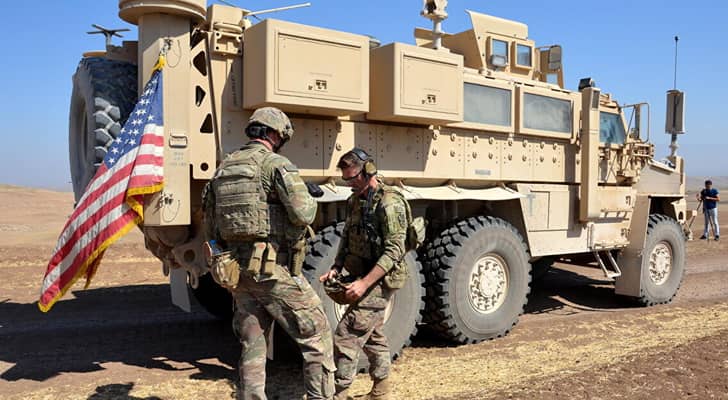
The attack killed three Americans, including two soldiers and a civilian translator, and wounded members of both US and Syrian forces, according to Washington and Damascus.
US Central Command said the attacker was killed and three US soldiers were wounded. It said the delegation was in Palmyra as part of a mission supporting ongoing operations against the Daesh group.
Transition period strains security apparatus
The incident comes during a sensitive transitional period in Syria following the ousting of Bashar al-Assad on Dec. 8, 2024, after a near-total collapse of internal security and police institutions.
Facing a wide security vacuum, the new authorities opened large-scale recruitment, leading to the enlistment of thousands in the early months. The rapid rebuilding process has raised challenges related to vetting and experience. Authorities have also moved to form a new army aimed at unifying military and security structures under a single central command.
US vows response
In Washington, the President of the United States Donald Trump pledged to respond to the attack, saying it occurred in a “highly dangerous” area not fully under Syrian control.
US Special Envoy to Syria Tom Barrack said the attack was a “stark reminder that terrorism remains a persistent threat,” adding that a limited number of US forces remain deployed in Syria to complete the mission of defeating the Daesh group and preventing its resurgence, as its cells continue to operate intermittently in the Syrian desert.