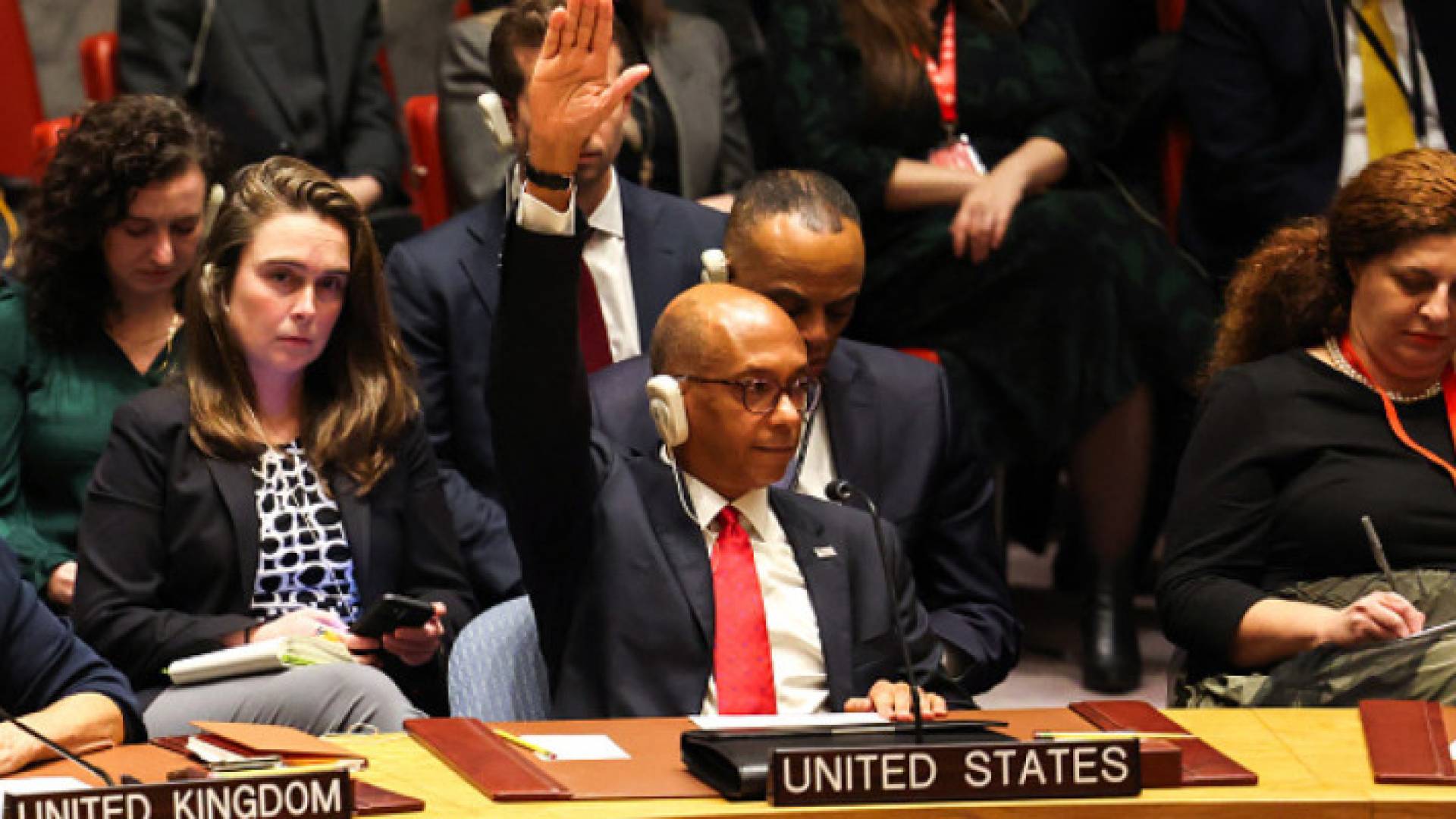
Behind the US veto power against the ceasefire resolution in Gaza
The United States exercised its “veto” power to block a resolution demanding an immediate ceasefire in the Gaza Strip Friday in the United Nations Security Council
Despite an overwhelming support of the majority of the 15 members of the Security Council, the resolution was denied due to the sole vote of the United States, which holds a permanent ability to reject, or veto, any resolution that it does not see fit.
This controversial mechanic, a hallmark of the UN Security Council, can also be exercised by five other countries who hold a permanent membership to the Council, they are China, France, Russia, the United Kingdom, and the United States.
A single vote, or veto, from this group of countries, also called as the P5, can block any resolution despite an overwhelming support of the other permanent and non-permanent members of the Security Council.
The United Nations system, formed directly after the second World War, gave this power to the P5 due to being the victors of WWII, believing that giving these countries a veto would ensure their cooperation and prevent them from acting unilaterally.
Veto power also prevents any one country or group of countries from dominating the UN. This can help maintain the balance of power, as it forces countries to work together and reach consensus on important issues.
The veto system has been described as unfair and undemocratic, and it is argued that it gives the P5 too much power which can be used to block important actions, such as humanitarian interventions or resolutions condemning human rights abuses - as is the case with the current Israeli Occupation aggression against the Gaza Strip.
The resolution, put forward by the United Arab Emirates, was backed by 13 of 15 members of the council, the UK abstained from the vote, with the US blocking it completely.
The resolution described the humanitarian situation in Gaza as catastrophic, called on the protection of civilians and ‘humanitarian access’ to the Strip.
It was submitted after UN Secretary-General Antonio Guterres invoked article 99 of the United Nations charter in a rare move last week, which allows the UN Chief to highlight the global threat posed by the two-month-long war in front of the Security Council.
The United States' deputy representative at the UN, Robert Wood, said the resolution was "divorced from reality" and "would have not moved the needle forward on the ground."
The Israeli Occupation aggression continues against the Gaza Strip, with Gaza’s Ministry of Health stating that the latest death toll stands at 17,700 with 48,780 injured since October 7.