

Day 84 | Signs of progress amid efforts to reach US-Iran peace deal
Iran’s chief negotiator says the United States is seeking to restart the war, accusing Washington of carrying out “overt and clandestine movements” that indicate preparations for a new attack.
US President Donald Trump said the American military may strike Iran “even harder” if tensions escalate, but added that Washington will wait to see whether a peace agreement can be finalized after previously stating that negotiations were in their “final stages.”
Meanwhile, US Marines boarded an Iranian-flagged oil tanker in the Gulf of Oman after suspecting it had violated a US blockade while heading toward an Iranian port. The vessel was later released.
At the same time, Pakistan’s Interior Minister Mohsin Naqvi arrived in Iran in what officials described as an effort to facilitate the exchange of messages and provide further clarification regarding communications sent between the parties.
Day 85 of the US-‘Israeli’ war on Iran
For further updates - visit the link below.
Read more: Day 85 | Tehran says US demand to hand over uranium would doom any deal
'Israeli' army calls for evacuation of two areas of Tyre in south Lebanon
The 'Israeli' military on Friday called for the evacuation of two areas of Tyre in southern Lebanon, which has already been targeted by numerous 'Israeli' strikes, despite a ceasefire.
On X, the army's Arabic-language spokesman, Avichay Adraee, called for residents of two buildings and surrounding areas to leave, including one in a densely populated area of the city.
"You are located near Hezbollah facilities that the (Israeli military) is about to operate against," he added.
Trump weighs final military operation to end war: Axios
A source close to Donald Trump told Axios the US president has grown increasingly frustrated in recent days and is considering a final major military operation before declaring victory and ending the war.
Iran says Qatar-mediated talks with US reach “turning point”
Iranian Foreign Ministry spokesman Esmaeil Baghaei said ongoing Qatar-mediated negotiations with the United States have reached a “turning point,” while stressing that Tehran will not reveal details of nuclear discussions after past talks “led to war” and reaffirming Iran’s right to peaceful nuclear energy under the Nuclear Non-Proliferation Treaty.
Hezbollah claims series of drone and rocket attacks on 'Israeli' military targets
Hezbollah said it targeted 'Israeli' troop gatherings, a Merkava tank and military positions near the border with explosive drones and rockets on Friday.
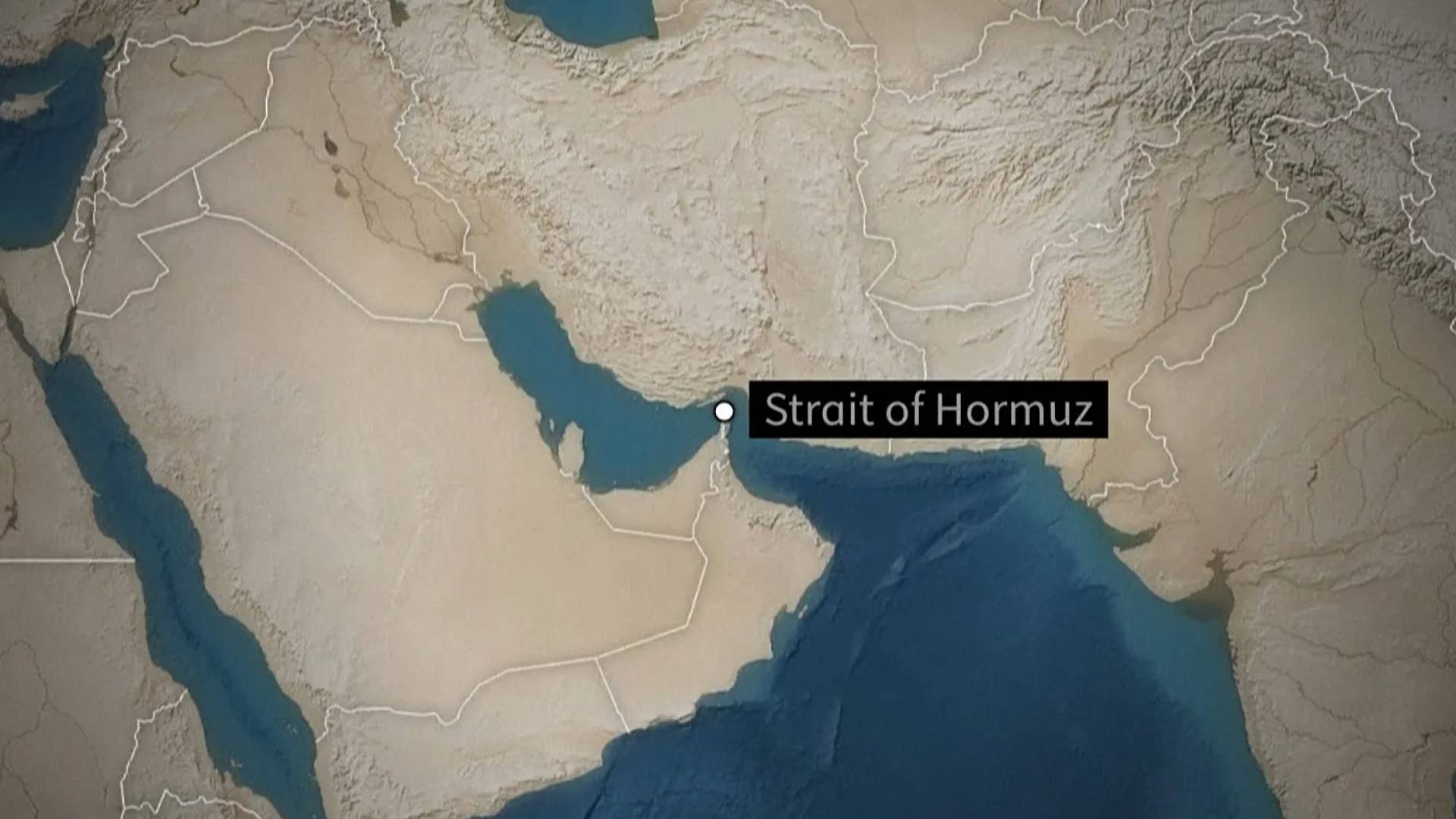
France drafts UN mission plan for Strait of Hormuz amid US pushback
France is preparing a UN resolution for an international Hormuz shipping mission as US efforts face resistance from Russia and China.
'Israeli' soldier wounded after explosive drone infiltrates northern border area
An 'Israeli' soldier was injured in the abdomen after an explosive-laden drone detonated in Misgav Am near the Lebanese border, 'Israeli' media reported.
Pakistan military chief departs to Iran: security sources
Pakistan Field Marshal Asim Munir departed Friday for an official visit to Tehran, security sources to AFP.
"Munir has left today for an official visit where he will have meetings with Iranian leadership," the sources said.
VIDEO - IRGC says Iran at peak readiness, warns of crushing response
- IRGC says Iran at unprecedented readiness.
- Tehran warns of harsher retaliation.
- Iran says next response will be decisive.
The Commander of the Islamic Revolutionary Guard Corps (IRGC) in the Iranian capital, Commander Hassan Zadeh, has issued a military warning, declaring that the combat and defensive readiness of the Iranian armed forces has been raised to unprecedented levels.
Speaking to the media on the occasion of Quds Day, Hassan Zadeh addressed the ongoing regional escalations, framing the current geopolitical environment as a "proxy war on its third front" in the Middle East.
He extended his gratitude to the mobilizing Iranian crowds, asserting that massive public attendance directly fuels the military's field capabilities and strength.
Threats of retaliation
The military commander directed a strict, unequivocal warning to adversarial powers regarding any potential future strikes against Iranian interests.
"All our armed forces today are more prepared and ready than ever before. They possess the capabilities and efficiency that enable them to deliver a response that is harsher, stronger, and more painful than the past, should the enemy commit any foolish act or error in their calculations and estimates once again." Stated Tehran IRGC Commander, Hassan Zadeh.
Limits of calm
Hassan Zadeh emphasized that Tehran's military strategy will not hesitate to decisively settle the conflict if targeted.
He noted that the nature of any upcoming clash will change fundamentally amid multiplying naval and land confrontation fronts across the region.
"Our response will be decisive, definitive, regret-inducing, and will bring an end to everything," Hassan Zadeh stated.
The commander indicated that any forthcoming confrontation will no longer be bound by the ceilings of previous de-escalation efforts, aiming instead to serve as a total and absolute deterrent.
Intel warns of possible Iranian attacks over Gulf, 'Israel'
- Intel warns Iran may launch surprise attacks.
- Trump, Netanyahu reportedly split on Iran strategy.
- Fears Tehran may strike before talks collapse.
- US-'Israeli' forces boost military coordination.
Intelligence officials issued warnings on Thursday indicating that Iran could potentially be planning a surprise preemptive attack involving a combination of missiles and unmanned aerial vehicles against Gulf States and 'Israel'.
The threat of an impending Iranian strike was raised following a situational assessment conducted alongside top military leaders and Defense Minister Israel Katz.
The alerts come at a critical diplomatic juncture as the United States and Iran continue ceasefire negotiations.
Behind the scenes, however, US President Donald Trump and Prime Minister Benjamin Netanyahu are reportedly disagreeing on the exact strategy for moving forward with Iran.
Fears of repeated surprise offensive
According to security officials, Tehran's motivation for a preemptive strike may stem from a desire to act before the US and 'Israel' officially decide that the diplomatic path is no longer viable.
Officials noted that Iran could attempt to launch a surprise offensive similar to the operations that marked the beginnings of Operation Epic Fury and Operation Roaring Lion.
In response to the shifting threat matrix, the Air Force and the 'Israeli' military’s Operations Directorate -under the direction of Hidai Zilberman and other senior officials- have held a series of strategic discussions with their American counterparts.
These meetings focused heavily on improving combat readiness and facilitating the transfer of intelligence regarding unusual Iranian activity.
Operations reinforced
In tandem with the technical discussions, 'Israeli' Military Chief of Staff Eyal Zamir conducted comprehensive security briefings with military commanders as part of an overall defensive and offensive situational assessment.
Zamir has maintained direct lines of communication with his American counterparts to seamlessly coordinate a joint response in the event that Tehran initiates an attack.
A military source told 'Israeli' Walla website that a thorough review was successfully executed following recent US-'Israeli' operations.
The review evaluated the joint capabilities regarding the detection, identification, and interception of a wide range of threats originating from Iran.
The subsequent assessment has reportedly strengthened joint US and 'Israeli' military operations.
Key improvements have been integrated across missile interceptions, state-military cooperation, technology and software updates, and the reinforcement of active troops.
This synchronization is backed by a logistical surge, as the volume of US military equipment being transferred to 'Israel' has increased sharply over the past month.
NATO, US address defense production deficits
- NATO boosts defense spending, warns on munitions shortages
- Rutte thanks allies for Ukraine military aid
- Rubio says US troop review not punitive
- NATO, US reject Iran Hormuz toll plan
NATO Secretary General Mark Rutte and US Secretary of State Marco Rubio held a joint press conference ahead of the NATO foreign ministers' meeting, laying the groundwork for an upcoming leaders' summit slated to take place in six weeks.
The discussions heavily focused on rapid spikes in defense spending, critical gaps in military manufacturing, the war in Ukraine, and escalating maritime tensions with Iran.
Surging defense funds
Secretary General Rutte opened the conference by highlighting that alliance defense spending is ramping up rapidly, building upon the successes of The Hague Summit.
"The money is now coming in," Rutte stated, noting that tens of billions of dollars are currently being injected, with hundreds of billions expected over the coming years.
However, both diplomats pointed to a severe bottleneck in the alliance's ability to manufacture hardware.
Rutte stated that the defense industrial base "is not producing enough," identifying it as a shared problem across Europe and the United States that will serve as a major agenda item at the upcoming Ankara Summit.
Secretary Rubio echoed these concerns, emphasizing the threat to future readiness.
"It is clear to the world, to all of us in the Alliance and beyond, that we simply are not able to produce munitions today at a rate that are necessary for future needs. That’s something that has to be addressed." Said Rubio.
Despite the production shortfall, Rutte noted that the ramp-up offers a significant "defense dividend" by fostering transatlantic bonds, opening new factories, and generating jobs across the Atlantic.
Ukraine file
The war in Ukraine remains a primary focus for the foreign ministers.
Rutte extended gratitude to the United States for ensuring that the vital flow of military support continues to reach Ukrainian forces, explicitly pointing to Patriot system interceptors that are being financed by European and Canadian allies.
Shifting US deployments
Addressing US commitments to the alliance, Rubio referenced a presidential announcement regarding a military deployment to Poland.
He explained that the United States is continuously re-examining its troop placements due to global security commitments, clarifying that these adjustments are part of a pre-existing process and are "not a punitive thing."
Rubio did, however, acknowledge underlying political friction within the alliance.
He stated that the US President’s disappointment regarding how certain NATO allies responded to American operations in the Middle East is "well documented."
Rubio clarified that while the issue will not be solved by the foreign ministers, it will be kicked up to the leaders' level at the upcoming summit.
Movement on Iran
Turning to the Middle East, Rubio shared an early update on ongoing diplomatic tracks with Iran, noting that there has been a "little bit of movement."
While cautioning against exaggerating the breakthrough, he called the slight progress good, but maintained that the underlying US position is unyielding.
"Iran can never have a nuclear weapon," Rubio said, adding that the international community must directly address the regime's highly enriched uranium and enrichment capabilities.
The joint conference featured a sharp, unified condemnation of Iran's recent maritime maneuvers in the Arabian Gulf.
Rutte stated that many NATO colleagues find it entirely "unacceptable" that the freedom of navigation is being "trampled upon" by Iran, praising US actions to degrade Tehran's nuclear and long-range missile capabilities.
Rubio detailed an ongoing Iranian effort to establish a localized tolling network in international waters, revealing that Tehran is actively trying to pressure Oman to join the system.
"There is not a country in the world that should accept that," Rubio warned, explaining that if a tolling system is tolerated in the vital Strait of Hormuz, identical illegal frameworks will replicate across five other critical waterways worldwide, heavily impacting the Indo-Pacific region.
To counter the maritime toll, Rubio highlighted a current Bahrain-sponsored resolution at the United Nations Security Council.
According to the Secretary, the measure has secured the highest number of co-sponsors of any resolution in Security Council history, with nearly every nation present at the NATO meeting signing on.
However, Rubio concluded with a warning, noting that a couple of unspecified countries on the Security Council are currently considering a veto, an outcome he described as "lamentable" as the US continues to push for a global consensus.
13 rats overwhelm 'Israeli' military base in Haifa amid sanitation claims
- Source alleges rat infestation at Haifa naval base.
- Rats reportedly contaminate stored food.
- Staff say response remains inadequate.
- 'Israel' says issue handled, renovations ongoing.
Allegations of "catastrophic" sanitary conditions have surfaced at the 'Israeli' military Haifa Naval Training Base, which houses approximately 1,200 male and female soldiers.
According to a report by N12 News, an anonymous source working in the base's kitchen alleges that the military's response has been entirely insufficient to manage a daily manifestation of rats.
The anonymous worker stated that appeals regarding the sanitation crisis have been made for months, noting that rats frequently enter the facility through holes in the walls, plumbing systems, and air-conditioning ducts.
"Everything here is rotten and exposed," the source told N12, pointing out that up to 13 rats have been spotted in a single day.

Rats found in the food at the Haifa Naval Base. (credit: SCREENSHOT/N12)
Contaminated food pots
The kitchen employee recalled a shocking incident that occurred while preparing lunch for the soldiers.
"We took a pot out of the refrigeration room to start heating it. I came to stir it with a large spoon, and suddenly I lifted the spoon and saw a rat inside the pot," the source described, calling it one of the most shocking things he had ever witnessed.
Furthermore, the source alleged that rats regularly gnaw through the lids of food containers intended for soldiers who eat outside of the dining hall.
While kitchen staff throw away food if they spot bite marks or dirt, the source warned that "it is impossible to know about everything".
Conditions have reportedly become so severe that staff make it a custom to arrive at 5 am to document and photograph the rats running into wall cavities inside the refrigeration rooms.

Signs of rats in the food at the Haifa Naval Base. (credit: SCREENSHOT/N12)
Demands for closure vs. military assurances
The source argued that the building's infrastructure is fundamentally flawed, citing rotten plumbing, an old ceiling, and an aged structure.
While the 'Israeli' military stated that renovations -such as sealing openings in the walls and refrigeration rooms- were carried out, the source countered that the rats "come back every time" and that the real solution requires closing the kitchen entirely for a thorough overhaul.
According to N12, the military assured that it is actively handling the matter and has arranged for an exterminator to visit the base on a weekly basis.
The kitchen employees, however, claimed these measures are ineffective and stated they had to purchase their own rat traps because the military's plastic traps did not help.
"What interests them [the military officials] is that there should be bread and that tables should be cleaned," the source claimed.
In response to the report, the 'Israeli' military clarified that the images showing a rat inside a cooking pot and gnawed food containers are from several months ago and that the situation has since been dealt with.
The military added that army health officials conduct routine inspections alongside pest control and preventive measures to safeguard soldiers' health.
The 'Israeli' military further noted that while infrastructure renovations are underway, soldiers are currently receiving their meals from an external catering provider.
IRGC coordinates transit of 35 vessels through Hormuz
- IRGC grants access to 35 vessels to pass the Strait of Hormuz.
- The access was announced refuting Rubio's latest statements refusing Iran's tolls over Hormuz passage.
The Islamic Revolutionary Guard Corps (IRGC) navy announced that 35 vessels, safely transited the Strait of Hormuz over the past 24 hour, according to Iranian Tasnim news agency.
The vessels included oil tankers, container ships, and other commercial carriers
IRGC navy confirmed that the passage comes after obtaining necessary permits and coordinating security with Iranian naval forces.
Refuting Rubio's demands
The announcement of safe passage to this number of vessels comes following US Secretary of State, Marco Rubio's sharp rejection of Iran's latest maritime policies.
Rubio stated earlier that the United States does not believe any nation will accept paying fees in exchange for passage through the Strait of Hormuz.
Rubio characterized Iran's attempt to enforce transit tolls in the Strait of Hormuz as an act of extortion, reiterating that it is a maneuver no country will tolerate.
US Secretary of State notes progress in Iran talks
- US says Iran talks show progress
- US says that no country will accept Hormuz passage fees
- Rubio calls Iran toll plan “extortion”
The US government has reported incremental movement in its diplomatic tracks with Iran while simultaneously drawing a firm line against Tehran's maritime demands in the Gulf.
The US Secretary of State, Marco Rubio, announced that diplomats have achieved some progress on the negotiation front with Iran.
However, Rubio paired the update with a sharp rejection of Iran's latest maritime policies, stating unequivocally that the United States does not believe any nation will accept paying fees in exchange for passage through the Strait of Hormuz.
The stance against Iran's maritime transit fees was echoed by Rubio, who strongly condemned the restrictions.
Rubio characterized Iran's attempt to enforce transit tolls in the Strait of Hormuz as an act of extortion, reiterating that it is a maneuver no country will tolerate.
UKMTO reports incident north of Yemen’s Socotra
- UKMTO reports suspicious activity near Socotra
- Small craft approaches commercial tanker
- Security team fires warning shots
- Crew safe, vessels urged to stay alert
The UK Maritime Trade Operations (UKMTO) has issued a maritime security warning following a suspicious approach targeting a commercial tanker in the waters north of Socotra.
According to an official UKMTO report filed on May 22, 2026, the incident took place 98 nautical miles north of Socotra.
The Company Security Officer (CSO) of the targeted tanker confirmed that the vessel was actively approached by a small craft carrying five individuals onboard.
In response to the suspicious approach, the tanker's onboard Armed Security Team intervened, firing warning shots directly toward the small craft.
The defensive action successfully forced the individuals to alter their course away from the commercial ship.
Relevant authorities have been notified and are currently investigating the encounter.
In light of the incident, the UKMTO has advised all vessels transiting the area to proceed with caution and immediately report any further suspicious activity.
Lebanese Army vows to resist destabilization, slams critics
- Lebanese Army stretched by 'Israeli' attacks
- Army rejects criticism of its role
- Military vows to protect Lebanon’s stability
The Commander of the Lebanese Army, General Rodolphe Haykal, declared that the military is operating at its maximum capacity to confront the severe consequences of ongoing 'Israeli' aggression, which has inflicted heavy destruction and resulted in numerous deaths and injuries across the country.
Addressing recent domestic political friction, Haykal firmly rejected public criticism of the military's performance during the conflict.
He asserted that any slander or questioning of the army's pivotal role directly serves the strategic interests of Lebanon's enemies, adding that these rhetorical attacks will fail to deter the armed forces from carrying out their national duties.
Concluding his remarks, Haykal positioned the army as a defensive shield for the state, promising that the military will stand as a firm barrier against any conspiracies designed to undermine domestic stability.
He emphasized that the armed forces maintain great hope and determination to successfully reclaim every single inch of Lebanese land.
US Navy official says Taiwan arms sales on 'pause' over Iran war
The acting US Navy secretary said Thursday (May 21) that arms sales to Taiwan had been put on "pause" to ensure that the American military had sufficient munitions for its Iran operations.
Asked at a congressional hearing about the stalled US$14 billion weapons purchase by Taiwan, acting secretary Hung Cao said that "right now we're doing a pause in order to make sure we have the munitions we need for Epic Fury - which we have plenty".
"But, we're just making sure we have everything, then the foreign military sales will continue when the administration deems necessary."
The US State Department and the Pentagon did not immediately respond to requests for comment on Cao's remarks.
US President Donald Trump has not committed to following through with the sale, raising concerns over his commitment to support for Taiwan, which China claims as its own territory.
Ahead of his recent state visit to China, Trump said he would speak with Chinese President Xi Jinping about the arms sales, a departure from Washington's previous insistence that it will not consult Beijing on the matter.
Afterward, he said he had made no commitments to Xi about Taiwan and would be making a determination on the arm sales "over the next fairly short period of time".
The United States recognises only Beijing, but under US law is required to provide weapons to the self-ruled democracy for its defence.
China has sworn to take the island and has not ruled out using force, ramping up military pressure in recent years.
Pakistan’s interior minister to remain in Tehran for talks
Pakistan’s interior minister will remain in Tehran on Friday to continue consultations and hold meetings with Iranian officials.
UKMTO says threat level in Strait of Hormuz remains critical
The UK Maritime Trade Operations (UKMTO) organisation said the threat level in the Strait of Hormuz and the Gulf of Oman/Arabian Sea remains “critical”, with shipping traffic through the strait still significantly reduced.
The agency also warned that piracy threats remain severe, while risks including mined shipping routes and interference with satellite navigation systems continue across the region.
Iran and US continue indirect talks through Pakistani mediation
Indirect talks between Iran and the United States are continuing through Pakistani mediation, according to Iran’s ISNA news agency.
The report said Tehran and Washington are exchanging messages and draft texts in an effort to establish a formal framework for an agreement.


